The Bank of Japan raised interest rates to a three-decade high on Friday and signalled more policy tightening. The rate hike was widely expected.
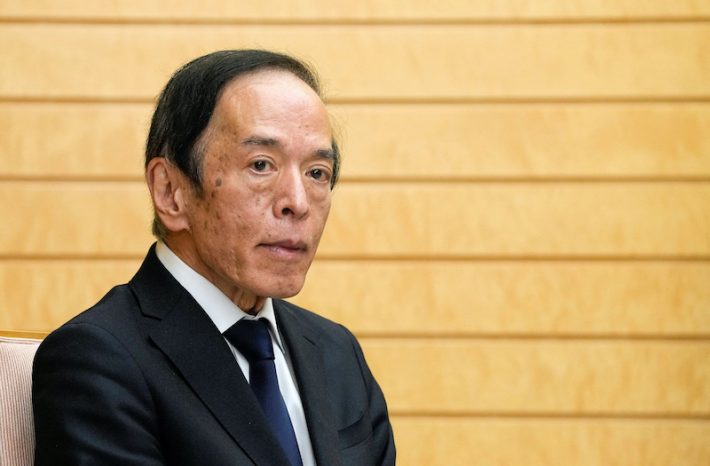
It caused the yield of Japan’s 10-year government bonds (JGBs) to jump to a 26-year peak. But, the yen quickly reversed an initial knee-jerk rise and fell as much as 0.7% to 156.71 per US dollar by 0754 GMT, shortly after BOJ Governor Kazuo Ueda’s post-meeting news conference ended.
The Nikkei share average, which finished trading right before Ueda began speaking, ended the day up 1% at 49,507.21, led by artificial intelligence-linked stocks after US peers rallied overnight following blowout forecasts from chipmaker Micron. The broader Topix climbed 0.8% to 3,383.66.
ALSO SEE: China’s Bytedance Signs JV Deal on Operation of TikTok in US
The 10-year JGB yield extended earlier gains, rising as much as 5.5 basis points to 2.02%, its highest since August 1999, following the central bank’s policy announcement. The 2% level had long served as a symbolic ceiling during Japan’s decades-long battle with deflation.
The BOJ raised short-term interest rates to 0.75% from 0.5% in the first increase since January. The central bank said there was a “high chance” for a virtuous cycle of rises in wages and inflation to be sustained.
‘Moving away from cautious stance’
“The biggest takeaway for me so far is that the BOJ has moved significantly away from the cautious stance it took previously,” said David Chao, global market strategist for Asia Pacific at Invesco.
At the same time, “the long-held belief that rate hikes would give the currency a boost has yet to materialise,” he said. “The BOJ’s gradual tightening … coupled with wide interest rate differentials and falling market volatility, could continue to keep the JPY weak.”
At the press conference, Ueda took his familiar measured, cautious tone, particularly on the neutral interest rate, which neither stimulates nor hampers economic growth. Traders had been keen for comments on the neutral rate to try and judge the terminal rate for this hiking cycle.
“Our estimate on Japan’s neutral rate sits on a pretty wide range. It’s hard to set a pinpoint estimate,” Ueda said.
“All I can say is that our future policy decision depends on the information that will become available at the time.”
The two-year JGB yield, which tends to be the most sensitive to monetary policy expectations, climbed as much as 3 bps to 1.095%, the highest since a record peak of 1.1% in June 2007.
The five-year yield added 5.5 bps to 1.485%, a level last seen in June 2008.
At the longer end, 20-year yields gained 3.5 bps to a record 2.97%. The 30-year yield climbed 4 bps to 3.415%.
So-called super-long yields began their current climb in early November as market speculation intensified over the potential size and shape of a stimulus package under the new government of Prime Minister Sanae Takaichi.
Initially, signs that the administration would pressure the BOJ to hold off on rate hikes to support the economy kept shorter-term yields pinned down, but Ueda triggered the biggest bond market selling for four months in early December when he sent a strong signal for an imminent rate hike, and hinted he had Takaichi’s consent.
The 10-year yield sat around 1.65% at the end of October.
Takaichi has billed her fiscal policy as “responsible” and “sustainable”, but investors worry about a wave of new debt issuance.
MUFG buys 20% stake in Shriram Finance
Meanwhile, in other business news from Japan, MUFG Bank will acquire a 20% stake in Shriram Finance Ltd (SFL) for $4.4 billion, the Indian non-bank lender said on Friday.
That is the largest cross-border investment in India’s financial sector and MUFG’s largest investment in India to date. It surpasses existing commitments of $1.7 billion in a sector that has struck deals worth nearly $15 billion so far this year, according to Dealogic data, more than double the $6.5 billion done in 2024.
The deal comes close on the heels of Emirates NBD Bank’s $3 billion investment for a 60% stake in Indian private lender RBL Bank in November, which was then the largest investment in the sector by a foreign bank. For years, Japan’s biggest banks have sought out overseas targets in the face of a shrinking domestic market and rock-bottom interest rates, with India becoming a popular destination due to its fast-growing economy.
Rival Sumitomo Mitsui Banking Corporation, a unit of Sumitomo Mitsui Financial Group, bought a 24.2% stake in Indian lender Yes Bank, starting with a 20% stake for $1.6 billion in May.
Shriram Finance, owned 24.9% by the Shriram Group, stated that the transaction is subject to regulatory approval. The SFL board has also approved granting MUFG certain minority protection rights, including the right to nominate up to two non-independent directors on its board and pre-emptive rights to maintain proportional shareholding. These rights will lapse if MUFG’s stake falls below 10% on a fully diluted basis, the company added.
MUFG will also have to pay a one-time non-compete and non-solicit fee of $200 million to SFL’s major shareholder Shriram Ownership Trust, subject to the non-bank lender’s shareholders’ approval.
Shriram Finance said the deal would improve its capital adequacy, bolster its balance sheet, and offer long-term growth capital. It will also aid in accessing low-cost liabilities and strengthening credit ratings, the non-bank lender noted.
“With this investment we hope to expand our activities in India to SMEs and individuals, adding to our core corporate banking base,” said Masashige Nakazono, executive officer at MUFG Bank and head of the global commercial banking planning division. “We aim to secure access to domestic demand in India that we think will drive overall growth,” Nakazono added.
Shriram Finance is one of India’s biggest retail non-banking financial entities, offering credit solutions for commercial and passenger vehicles for SMEs and individuals. Its assets under management stood at 2.8 trillion rupees, or $31 billion, as of the end of September.
The deal builds on MUFG’s already existing operations in India over the last 130 years. The group invested $565 million into India’s digital lender DMI Finance last year, making it the second largest shareholder with a 20% stake in the company.
Shares of Shriram Finance rose as much as 3.4% to a record 898.85 rupees following the news. Since talks of the MUFG deal were first reported in early October, the non-bank lender’s shares have jumped about 46%.
- Reuters with additional editing by Jim Pollard
ALSO SEE:
Japan’s Sumitomo Realty Bets on Mumbai’s Booming Real Estate
Japan’s Megabanks Raise Profit Forecasts as Deflation Eases
China Ramps up Trade Pressure on Japan Over Taiwan Remark
Japan’s Economy Contracts as Car Exports Sink in 3rd Quarter
Japan’s New PM Working on ‘Bold’ Stimulus Package, Draft Shows
Japan Signs Rare Earths, Nuclear Power Deal With Trump
Japan’s New PM to Meet Trump, ‘Will Buy US Soybeans, Pickups’
Nikkei Soars, Yen Sinks After Takaichi Picked as Japanese PM
Japan’s Topix Hits Record Peak, Yen Sinks as PM Ishiba Resigns