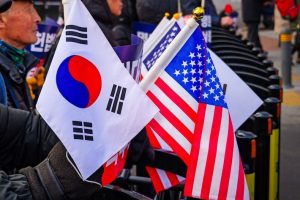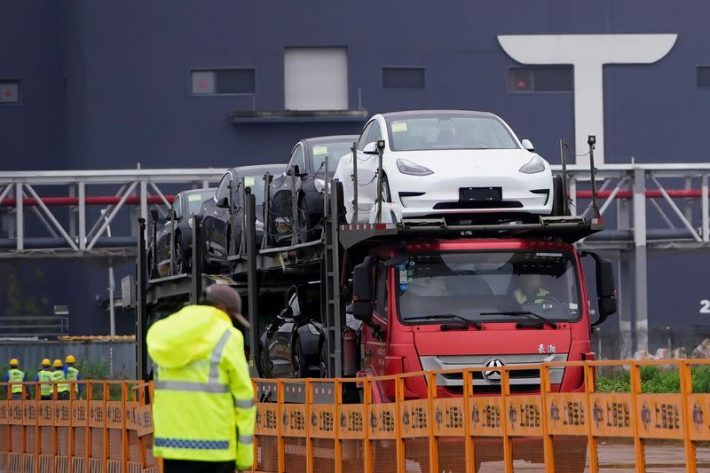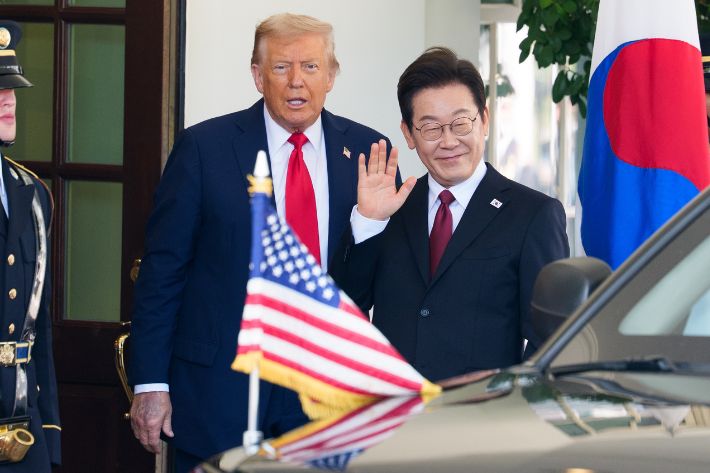
South Korea rushed to reassure Washington on Tuesday that it will act on the trade deal it struck with the Trump Administration – after President Trump threatened to hike tariffs on Korean cars and other imports.
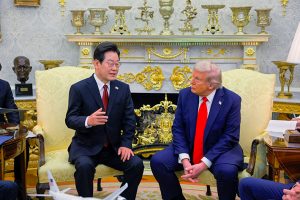
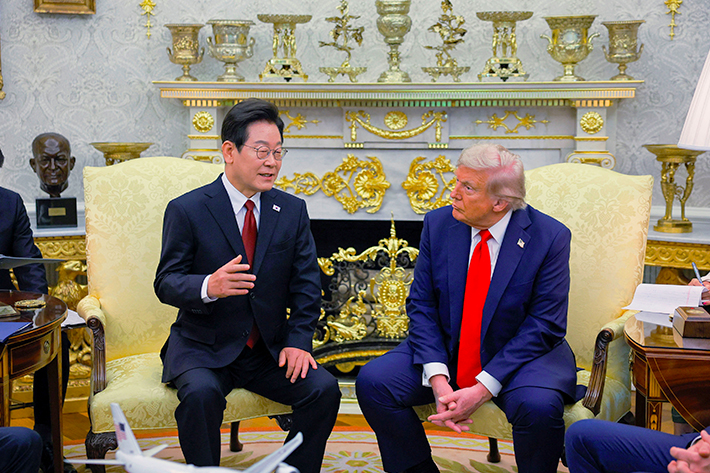
Trump accused Seoul on Monday of being slow to get parliamentary approval for huge investments in business projects in the US that were agreed on in the deal struck with President Lee Jae Myung and top Korean officials late last year.
Lee’s chief policy official called an emergency meeting in Seoul and plans to visit the US soon to meet US trade chiefs at the White House. The ruling Democratic Party said it will move to pass a bill approving the deal next month (February).
ALSO SEE: Carney Leads Trade Shift From US, to China, India, Australia
In a post on Truth Social, Trump said: “South Korea’s Legislature is not living up to its deal with the United States. President Lee and I reached a Great Deal for both Countries on July 30, 2025, and we reaffirmed these terms while I was in Korea on October 29, 2025. Why hasn’t the Korean Legislature approved it?
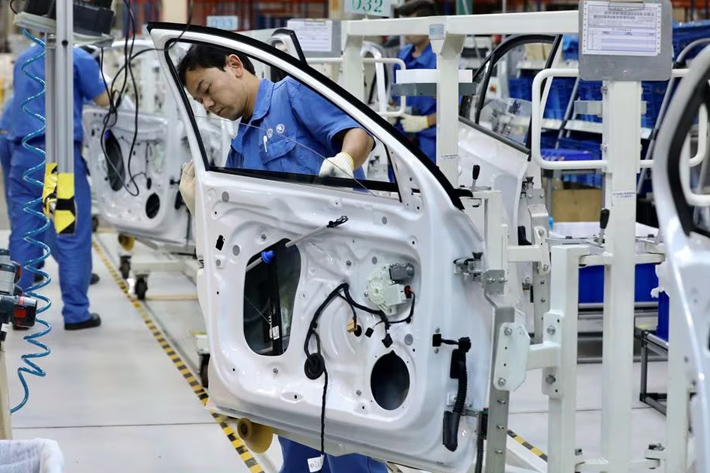
“Because the Korean Legislature hasn’t enacted our Historic Trade Agreement, which is their prerogative, I am hereby increasing South Korean TARIFFS on Autos, Lumber, Pharma, and all other Reciprocal TARIFFS, from 15% to 25%.”
The decision by Trump and his top trade officials caught officials in Seoul by surprise, according to Reuters, which said Seoul was trying to navigate the alliance and trade partnership amid potential challenges to its security and financial stability posed by Trump’s demands.
It also said South Korea’s presidential Blue House said the US government had not officially notified South Korea – one of the biggest exporters of goods to the United States – of the tariff hike. And it was not immediately clear when the hike would take effect.
The two presidents initially agreed on a deal in principle last July for Seoul to make $350 billion of investments in the US, despite concern that such a large outflow could destabilize finances in Asia’s fourth-largest economy.
Under the deal, South Korea agreed to pay $200 billion of the above sum in cash, in phased instalments capped at $20 billion a year in an effort to enable the Korean won to remain stable. But its finance minister had warned that payments were unlikely to start until the second half of 2026 because of the currency’s weakness.
Court verdict still pending
The White House move has surprised some analysts, who have said trading partners may be hesitating and unsure how to proceed on trade agreements because the US Supreme Court has yet to rule on whether Trump’s tariffs have been issued in a legally permissible way.
In November, Supreme Court justices cast doubt on Trump’s authority to impose tariffs under the 1977 International Emergency Economic Powers Act (IEEPA), which contains no references to tariffs – only language on regulating imports during national emergencies declared by the US president.
There have also been claims that Trump may have been spurred to act by recent South Korean regulatory actions against Coupang, a US-listed e-commerce company that has complained that the moves were unfair and discriminatory.
South Korea’s KOSPI index fell over 1% and Hyundai stocks plunged over 5% before bouncing back later on Tuesday.
- Jim Pollard
ALSO SEE:
US, Korea reveal details on building ships and nuclear subs
Supreme Court defeat seen adding to uncertainty on Trump tariffs
Hyundai raid: How a visa loophole landed Korean workers in trouble
S Korea’s Lee will try to pacify Trump with big shipbuilding boost
S Korea to invest $350bn in US projects, energy; gets 15% tariff