A top Japanese Cabinet minister has sought to calm a storm that has rattled some of its citizens – and neighbours, after an official in the Prime Minister’s office suggested the country should acquire nuclear weapons to deter potential aggressors.
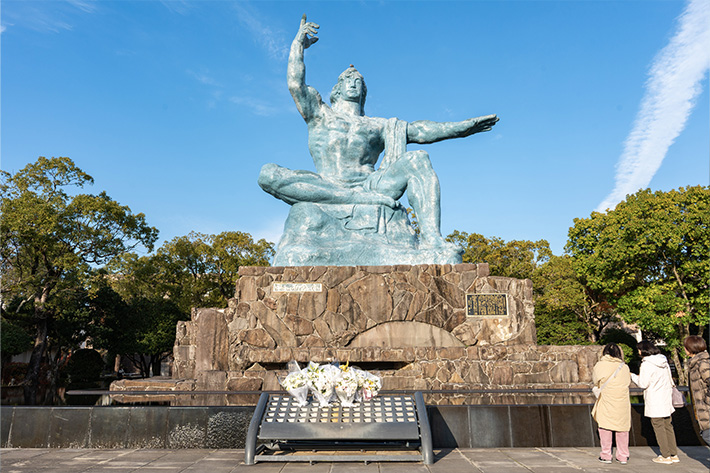
Nuclear weapons continue to be a sensitive topic in Japan, given the bombs dropped on the country in August 1945 that killed up to a quarter of a million people (mostly civilians), at the end of World War Two.
So it was perhaps no surprise that Japan reaffirmed its decades-old pledge never to possess nuclear weapons on Friday after local media reported the senior security official’s remarks.
ALSO SEE: 10-Year Bonds Soar, Nikkei Rises, Yen Slides as BOJ Hikes Rate
The unnamed official said Japan needed nuclear weapons because of a worsening security environment, but acknowledged that such a move would be politically difficult, public broadcaster NHK, and other outlets reported, describing the official as being from Prime Minister Sanae Takaichi’s office.
A report by Kyodo said Takaichi is “known for her hawkish security views,” and “is considering reviewing Japan’s non-nuclear principles.”
At a regular press briefing in Tokyo, Chief Cabinet Secretary Minoru Kihara said Japan’s nuclear policy had not changed, but declined to comment on the remarks or to say whether the person would remain in the post amid calls from opposition leaders for the official to be removed.
There is a growing political and public willingness in Japan to loosen its three non-nuclear principles not to possess, develop or allow nuclear weapons into its territory, a Reuters investigation published in August found.
Threats from three neighbours with nukes
While it remains a highly sensitive subject in the only country to have suffered atomic bombings, doubts over the reliability of US security guarantees under President Donald Trump and growing threats from nuclear-armed neighbours China, Russia and North Korea have re-ignited the debate.
Some lawmakers within Takaichi’s ruling party have said the United States should be allowed to bring nuclear weapons into Japan on submarines or other platforms to reinforce deterrence.
Takaichi last month stirred debate on her own stance by declining to say whether there would be any changes to the three principles when her administration formulates a new defence strategy next year.
“Putting these trial balloons out creates an opportunity to start to build consensus around the direction to move on changes in security policy,” said Stephen Nagy, a politics professor at the International Christian University in Tokyo.
Beijing’s assertiveness and growing missile cooperation between Moscow and Pyongyang are “creating the momentum to really change Japan’s thinking about security,” he added.
‘An issue Japan should debate’
Taro Kono, a senior ruling-party lawmaker and former defence and foreign minister, said on Friday that Japan should not shy away from a broader debate on the pros and cons of acquiring nuclear weapons.
Discussions about acquiring or hosting nuclear weapons have long been taboo due to the bombings of Hiroshima and Nagasaki at the end of World War Two and the country’s pacifist constitution adopted after its defeat.
Nihon Hidankyo, a group of atomic bomb survivors that won the Nobel Peace Prize last year for efforts to achieve a nuclear-free world, said in a statement that it “can never tolerate such a remark”.
Such talk also risks drawing ire from neighbouring countries, including regional security rival China.
“Should the information prove accurate, the situation would be extremely grave,” Guo Jiakun, a Chinese foreign ministry spokesperson said at a regular briefing when asked about the Japanese official’s reported comments.
“For some time now, Japan has persistently pursued erroneous actions and rhetoric on military security matters.”
Relations between Tokyo and Beijing have soured since Takaichi last month said a Chinese attack on Taiwan that also threatened Japan could trigger a military response. China claims the democratically governed island.
- Jim Pollard with Reuters.
NOTE: The pic on this report was re-attached on Jan 2, 2025.
ALSO SEE:
Japan’s Sumitomo Realty Bets on Mumbai’s Booming Real Estate
Japan’s Megabanks Raise Profit Forecasts as Deflation Eases
China Ramps up Trade Pressure on Japan Over Taiwan Remark
Japan’s Economy Contracts as Car Exports Sink in 3rd Quarter
Japan’s New PM Working on ‘Bold’ Stimulus Package, Draft Shows
Japan Signs Rare Earths, Nuclear Power Deal With Trump
Japan’s New PM to Meet Trump, ‘Will Buy US Soybeans, Pickups’
Nikkei Soars, Yen Sinks After Takaichi Picked as Japanese PM
Japan’s Topix Hits Record Peak, Yen Sinks as PM Ishiba Resigns