The US government has granted licences to three of Asia’s biggest chipmakers to send US chip manufacturing equipment to their facilities in China.
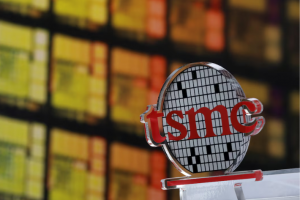
The world’s leading chipmaker, Taiwan Semiconductor Manufacturing Company (TSMC), announced the news on Thursday, saying it was allowed to import equipment to its set-up in Nanjing, China.
The approval “ensures uninterrupted fab operations and product deliveries,” the company said in a statement to Reuters.
ALSO SEE: China Now Requires Chipmakers to Use At Least 50% Local Equipment
South Korea’s Samsung Electronics and SK Hynix have also received similar import licences.
Previously, the Asian companies had benefitted from exemptions from Washington’s sweeping restrictions on chip-related exports to China, which is part of US efforts to try to stay ahead of China in technological development.
But those privileges – known as validated end-user status – expired on December 31 and the companies had to seek new US export licences for 2026.
“The US Department of Commerce has granted TSMC Nanjing an annual export licence that allows US export-controlled items to be supplied to TSMC Nanjing without the need for individual vendor licences,” TSMC said in its statement.
It added the licence “ensures uninterrupted fab operations and product deliveries”.
The Nanjing plant makes 16-nanometre and other mature node chips – not TSMC’s most-advanced semiconductors. TSMC also has a chipmaking plant in Shanghai.
In its 2024 annual report, TSMC said its Nanjing site generated about 2.4% of overall revenue.
Nvidia asks TSMC to ramp up H200 output
In related news, Nvidia is scrambling to meet strong demand for its H200 artificial intelligence chips from Chinese technology companies and has approached contract manufacturer TSMC to ramp up production, sources told Reuters on Dec 31.
Chinese technology companies have placed orders for more than 2 million H200 chips for 2026, while Nvidia currently holds just 700,000 units in stock, two of the people said.
The exact additional volume Nvidia intends to order from TSMC remains unclear, they said. A third source said Nvidia has asked TSMC to begin production of the additional chips, and work is expected to start in the second quarter of 2026.
The moves raise concerns over whether there could be further tightening in global AI chip supplies as Nvidia now has to strike the right balance between meeting robust Chinese demand and addressing constrained supplies elsewhere.
They could also intensify risks for Nvidia, as Beijing has yet to greenlight any shipments of H200 chips. The administration of US President Donald Trump only recently allowed exports of the H200 to China.
The talks between Nvidia and TSMC and details of the Chinese demand have not been reported before. The pricing has also not been reported earlier – Nvidia has decided which H200 variants it will offer to Chinese clients and price them around $27,000 per chip, the sources said.
In response for a request for comment, Nvidia that it continuously manages its supply chain. “Licensed sales of the H200 to authorised customers in China will have no impact on our ability to supply customers in the United States,” a spokesperson said.
“China is a highly competitive market with rapidly growing local chip suppliers. Blocking all US exports undercut our national and economic security and only benefitted foreign competition.”
TSMC declined to comment and China’s Ministry of Industry and Information Technology did not immediately respond to a request for comment. Reuters spoke to five people for this story, who declined to be named as the discussions are private.
The potential order would mark a significant expansion of H200 production at a time when Nvidia has been focused on ramping up its newer Blackwell and upcoming Rubin chip lines. The H200, part of Nvidia’s previous-generation Hopper architecture, uses TSMC’s 4-nanometre manufacturing process.
Nvidia plans to fulfill initial orders from existing stock with the first batch of H200 chips expected to arrive before the Lunar New Year holiday in mid-February, Reuters reported earlier this month.
China tech giants drive demand
The bulk of the orders of over 2 million chips for 2026 has come from major Chinese internet companies, which view the H200 as a significant upgrade over chips currently available to them, two of the people said.
Of Nvidia’s current 700,000-unit inventory, around 100,000 are GH200 Grace Hopper superchips, which combine Nvidia’s Grace CPU with the Hopper GPU architecture, while the remainder are standalone H200 chips, one of them said. Both variants will be offered to Chinese clients, the person said.
While Nvidia has indicated a pricing ballpark to the Chinese customers, it would vary based on purchase volume and specific customer arrangements, two of the people said.
An eight-chip module is expected to cost around 1.5 million yuan, making it slightly more expensive than the now-unavailable H20 module, which previously sold for around 1.2 million yuan, they said.
However, given that the H200 delivers roughly six times the performance of the H20 – a downgraded chip Nvidia designed specifically for the Chinese market that was later blocked by Beijing from being shipped into China – the sources said Chinese internet firms view the pricing as attractive.
The price also represents a roughly 15% discount compared to grey-market alternatives, which currently retail at over 1.75 million yuan, according to the sources.
ByteDance plans to spend about 100 billion yuan on Nvidia’s chips in 2026, up from roughly 85 billion yuan in 2025, if China allows H200 sales, the South China Morning Post reported on Wednesday, citing sources.
Regulatory uncertainty
The planned shipments follow Trump’s decision earlier this month to allow H200 sales to China with a 25% fee, reversing the Biden administration’s ban on advanced AI chip exports to China.
However, Chinese officials are still deciding whether to allow H200 imports amid concerns that access to advanced foreign chips could slow development of the domestic AI semiconductor industry.
But they have not signalled immediate opposition. While Chinese chipmakers have managed to come up with products that rival the H20 in performance, there are not yet any equivalents of the H200.
One proposal under consideration would require bundling each H200 purchase with a certain ratio of domestically produced chips, Reuters previously reported.
- Reuters with additional editing by Jim Pollard
NOTE: Further text (on Nvidia’s H200 chip) was added to this report on January 2, 2026.
ALSO SEE:
China’s AI Chipmaker Biren Jumps 76% in Latest Hong Kong IPO
US Begins Reviewing Licences For Sale of H200 Chips to China
China Looks to Tackle Addiction, Self-Harm From AI Emulating Humans
China’s Big Tech Secret: Lab Copied Dutch Chipmaking Machine
China Firms Lobby For Nvidia’s H200 But Local Chips Remain
ByteDance, Alibaba ‘Looking to Place Big Orders’ For Nvidia’s H200
Nvidia’s Biggest Chinese Buyer Can No Longer Use Its Chips For AI
Powerful Nvidia Chip May Put Chinese Chipmakers in Choppy Waters
US Delays Fresh Chip Tariffs Against China to Keep The Peace
China ‘Cutting Electricity Bills In Half’ For Its AI Chip Firms – FT
Chinese AI Firms, Chipmakers Form Alliance To Ditch Foreign Tech