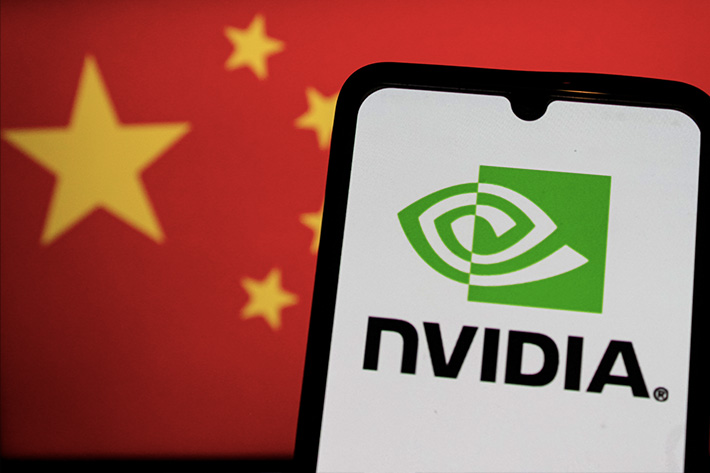
Beijing is preparing to limit domestic sales of Nvidia’s H200 chip, mere hours after US President Donald Trump announced he would allow the United States’ second-best artificial intelligence semiconductors to be sold in China.
According to a Financial Times report on Tuesday, citing people with knowledge of the matter, regulators in Beijing have been discussing ways to permit limited access to the H200.
Such a move would be in line with Beijing’s larger moves this year to restrict its firms — including some of its biggest tech players like Tencent and ByteDance — from using US technology, especially Nvidia chips.
Also on AF: China Chip Designer Moore Threads Soars 500% in Shanghai IPO
Beijing has previously claimed Nvidia chips pose risks to its national security. But the clampdown on the US chipmaker’s access to the Chinese market is driven by Beijing’s larger ambition of establishing a self-sufficient chip supply chain.
The push has also led Chinese firms to use more domestically made, but comparatively less-efficient chips, such as those made by Huawei.
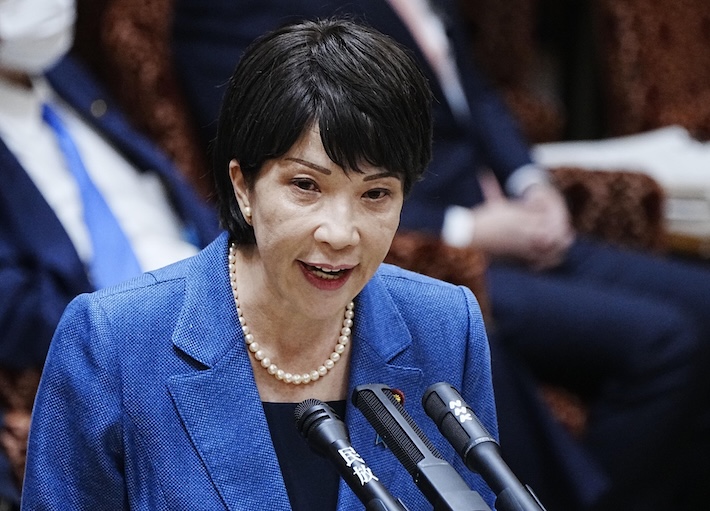
The Chinese plan to limit domestic access to the H200 comes even as Trump said on Monday night that he had informed President Xi Jinping of China about the move. Xi “responded positively,” Trump had said.
Trump made the announcement on his social media platform Truth Social, saying the US Commerce Department was finalising details of the arrangement and the same approach would apply to other AI chip firms such as Advanced Micro Devices (AMD) and Intel.
He said the US government would collect a 25% fee on such sales — higher than the 15% proposed in August.
“We will protect National Security, create American Jobs, and keep America’s lead in AI,” Trump wrote on Truth Social.
“NVIDIA’s US Customers are already moving forward with their incredible, highly advanced Blackwell chips, and soon, Rubin, neither of which are part of this deal,” he added.
Trump did not say how many H200 chips would be authorised for shipment or what conditions might apply, only that exports would occur “under conditions that allow for continued strong National Security.”
China’s approach likely ’softer’ than before
Administration officials consider the move a compromise between sending Nvidia’s latest Blackwell chips to China, which Trump has declined to allow, and sending China no US chips at all, which officials believe would bolster Huawei’s efforts to sell AI chips in China, a person familiar with the matter told Reuters.
And Trump’s approval did appear to settle a US debate about whether Nvidia and other US chipmakers should maintain their global lead in AI chips by selling to China, whose booming electronics industry makes it the world’s largest market for chip consumption.
Nvidia chief Jensen Huang has, over the past year, criticised American chip controls and lobbied the Trump administration to lift those restrictions to give American companies access to China’s ‘$50 billion AI market’.
Huang has said that China is ‘nanoseconds behind America in AI’ and that allowing Chinese rivals like Huawei and Cambricon unfettered access to the country’s market would mean these companies could soon start selling their products to the world.
That would likely explain why China is already considering a pushback against the H200. China has already banned sales of Nvidia’s lower tier H20 chips in the country.
In November, it also banned data centres supported by state funds from using foreign-made computer chips. Weeks later, it reportedly expanded that ban to TikTok-owner ByteDance, directing it not to use Nvidia’s chips at its new AI data centres.
Still, experts expect Chinese regulators to soften their hardline approach to Nvidia. The H200 chip is far more useful to China than the H20, George Chen, a partner at consultancy The Asia Group, told Reuters.
“I expect state media to gradually change their narrative and be more welcoming to Nvidia,” he said.
Bo Zhengyuan, a political analyst at consultancy firm Plenum, said he also believed Beijing would be more cautious about intervening.
“But on a longer horizon, we don’t know how long this window can last. China will not be disturbed by this easing, and it will remain ultra-focused on gaining advanced chip-making capability of its own,” he said.
Asked about Trump’s H200 approval on Tuesday, the Chinese foreign ministry told Reuters that China believes it should cooperate with the US to achieve mutual benefits.
Uncertainty around easing’s impact
Responding to the initial Trump announcement, Nvidia said in a statement that “offering H200 to approved commercial customers, vetted by the Department of Commerce, strikes a thoughtful balance that is great for America.”
Nvidia shares also shot up as much as 2% in pre-market trading. But the stock pared gains after the FT report on potential Chinese restrictions. They were last down nearly 1% [as of 0340 GMT]. The company did not immediately respond to request for comment on the FT report.
Ipek Ozkardeskaya, senior analyst at Swissquote Bank, also told Reuters the US approval alone may have limited impact on Nvidia’s business in China unless it is allowed to export other chip lines such as Blackwell or Rubin.
Meanwhile, according to a report released on Sunday by the non-partisan think tank, the Institute for Progress (IFP), the H200 would be almost six times as powerful as the H20.
The Blackwell chip now in use by US AI firms is about 1.5 times faster than H200 chips for training AI systems, the IFP said, and five times faster for inferencing work where AI models are put to use. Nvidia’s own research has suggested Blackwell chips are 10 times faster than H200 chips for some tasks.
Can Chinese chips compete with the H200?
For Chinese regulators mulling the extent of domestic access to the H200, a key concern could also be that the country’s chipmakers are yet to produce an AI semiconductor of the same efficiency.
Chinese chips have, so far, only managed to match Nvidia’s H20 in performance. The most advanced chip from Chinese suppliers is Huawei’s Ascend 910C, which lags significantly behind the H200 in computing power and memory bandwidth, according to the IFP report.
The 910C delivers total processing performance (TPP) of 12,032, compared with the H200’s 15,840, and has memory bandwidth of 3.2 terabytes per second versus the H200’s 4.8 TB/s.
Other domestic players offer less competitive products. Cambricon’s top chip, the Siyuan 590, and Hygon’s BW1000 both trail Huawei’s 910C in performance.
Furthermore, Nvidia’s dominance also stems from its CUDA software platform, which developers have long relied on to build AI models. Switching to domestic chips would require Chinese developers to rewrite code and retrain on new platforms, a costly and time-consuming process.
Despite domestic chips outperforming the H20 in raw computing power, Chinese internet companies still prefer Nvidia’s offering due to the lack of a mature domestic alternative to CUDA.
Huawei’s past struggles in meeting domestic demand — resulting partly from being cut-off from the most advanced chipmaking technology – has also made domestic Chinese chips comparatively less appealing.
Despite those concerns, however, China’s chip industry has seen robust growth so far this year. Chinese chipmakers are also aiming to triple their overall AI chip output next year.
China hawks in Washington have expressed concern that Trump’s move to green light H200 sales to China will only propel that growth.
Several Democratic US senators in a statement described Trump’s decision as a “colossal economic and national security failure” that would be a boon to China’s industry and military.
Republican Representative John Moolenaar, who chairs the House China Select Committee, said in a statement to Reuters that China would use the chips to strengthen its military capabilities and surveillance.
“Nvidia should be under no illusions – China will rip off its technology, mass-produce it themselves and seek to end Nvidia as a competitor,” he said.
- Vishakha Saxena, with Reuters
Also read:
US Lawmakers Move to Block Trump Easing China Chip Curbs
Nvidia’s Biggest Chinese Buyer Can No Longer Use Its Chips For AI
Powerful Nvidia Chip May Put Chinese Chipmakers in Choppy Waters
US ‘Likely To Delay’ Chip Tariffs To Keep China Ties Calm
China ‘Cutting Electricity Bills In Half’ For Its AI Chip Firms – FT
Chinese AI Firms, Chipmakers Form Alliance To Ditch Foreign Tech
Nvidia’s Top AI Chips Won’t Be Sold to China, Other States: Trump
Chinese Tech Giants ‘Want Nvidia Chips’ Despite Beijing Pushback
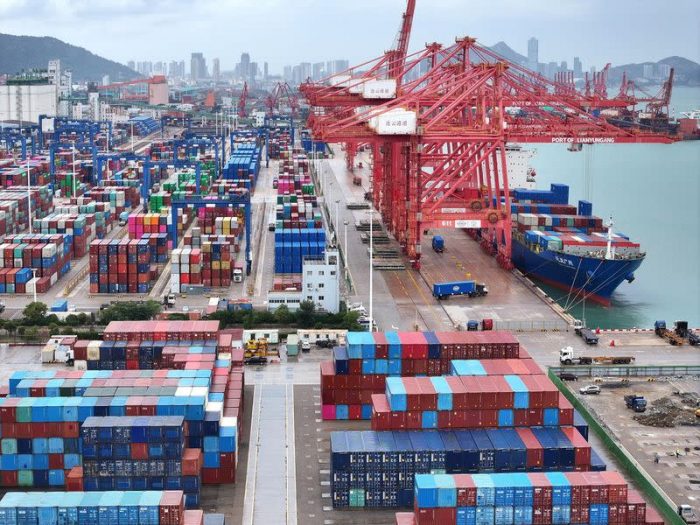
China Steps up Checks on Nvidia AI Chips at Major Ports, FT Says
Subsidies And Homegrown Tech: How China Plans To Rival Stargate
Nvidia CEO Says US Export Curbs on AI Chips is ‘Flawed’ Policy
China’s Huawei ‘Hoping Its New AI Chip Can Outpower Nvidia’
China’s Huawei, SMIC ‘to Ramp Up Production’ of Newest AI Chip
Satellite Images Show Huawei’s Expanding Chip Facilities – FT
Nvidia’s Bid To Stop Huawei
China Science Vs US Export Controls