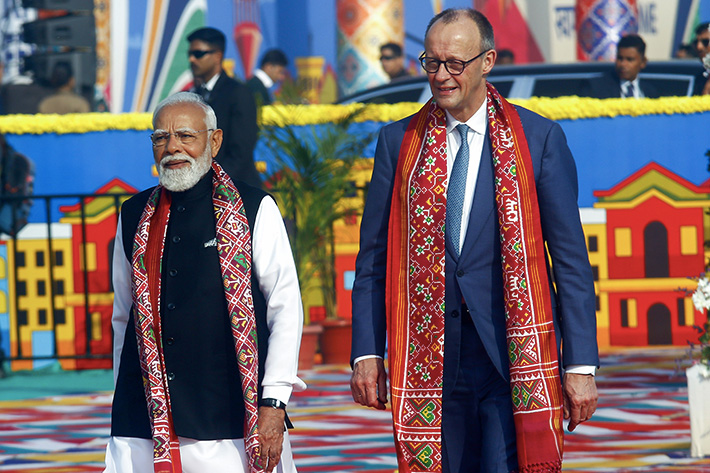
The European Union and India could sign a free-trade agreement as early as the end of this month, German Chancellor Friedrich Merz said after meeting Indian Prime Minister Narendra Modi on Monday.
The presidents of the European Commission and European Council would travel to India at the end of January to sign the agreement if it is finalised by then, Merz said during a visit to Ahmedabad, a city in western India.
“In any case, they will take another major step forward to ensure that this free-trade agreement comes into being,” Merz said during his first trip to India since becoming chancellor.
ALSO SEE: Microplastics Hindering Oceans’ Ability to Absorb CO2, Study Says
Negotiations had previously been expected to conclude by the end of this year. However, according to German government sources, there are high expectations that a deal could be signed at the end of January after “very intensive” talks between Merz and Modi.
Indian Trade Minister Piyush Goyal, speaking at a separate event in the western state of Gujarat, said an agreement was almost at its final stages.
‘Unfortunate protectionism’
Merz said the world is experiencing “a renaissance of unfortunate protectionism” that harms Germany and India.
He did not name any countries. The United States has been pressuring India with tariffs to end its purchases of Russian oil and gas, which Washington and the European Union argue is used to fund the war in Ukraine.
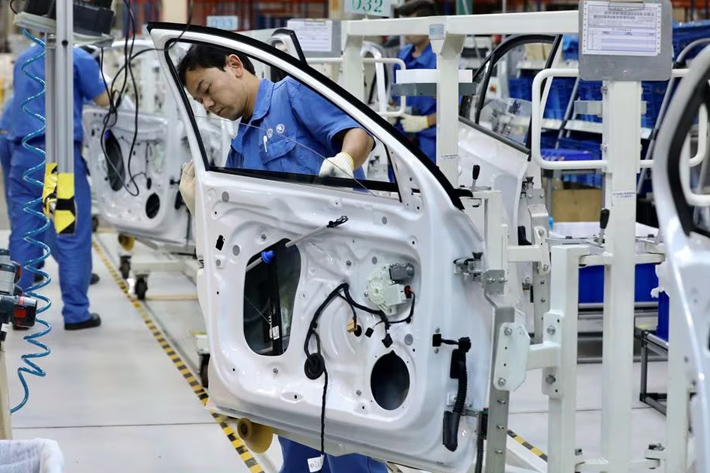
Chinese export controls on minerals, used in areas such as autos, caused months of supply chain disruption last year due to the US-China trade war, affecting German carmakers.
Beijing also slapped restrictions on some semiconductors widely used in the car industry after the Dutch government’s decision to seize control of Chinese-owned chipmaker Nexperia.
For the EU, signing a deal with India would follow the bloc’s go-ahead on Friday for concluding a deal with South America’s Mercosur group and would mark another step in creating its own trade networks as the United States shakes up global trade and would help reduce reliance on China.
In particular, Germany wants to work more closely on security issues with India, to reduce the latter’s reliance on Russia, Merz said.
The countries signed a memorandum of understanding to that effect, in addition to agreements on critical minerals, the health sector and an artificial intelligence innovation centre.
“The MoUs being signed today on all these issues will give new momentum and strength to our cooperation,” Modi said at a joint news conference with Merz.
India still works closely with Russia on security policy, and much of its military equipment is made in Russia. It is also one of the largest buyers of Russian gas and oil alongside China.
Germany is pushing the Indian government to ensure it prevents Indian companies from circumventing sanctions on Russia and reduces its energy imports from Russia – demands India has so far rejected.
Indian refiners happy to take Venezuelan oil
India has been negotiating a trade with the United States since early last year, and the chances of that occurring appear to have received a boost with Indian oil refiners saying they would be happy to buy oil from Venezuela, which could replace a fair amount of the oil currently being imported from Russia.
Reliance Industries Ltd, operator of the world’s largest refining complex in Gujarat, which finished buying Russian oil last month, said last Thursday it would consider buying Venezuelan oil – if it is permitted for sale to non-US buyers.
“We await clarity on access for Venezuelan oil by non-US buyers and will consider buying the oil in a compliant manner,” a spokesperson at Reliance Industries said in an emailed response to Reuters.
State-run refiners Indian Oil Corp and Hindustan Petroleum Corp will also consider buying Venezuelan oil if sales are allowed to non-US companies, industry sources said.
Caracas and Washington reached a deal this week to export up to $2 billion worth of Venezuelan crude, some 30-50 million barrels, to the United States, after US forces captured President Nicolas Maduro on January 3.
Reliance stopped buying Venezuelan oil from March 2025 as President Donald Trump announced a 25% tariff on nations buying crude from the South American producer. The conglomerate received its last Venezuelan oil cargo in May last year.
Reliance‘s two refinery complexes in western Gujarat state, with a combined capacity of about 1.4 million barrels per day of crude oil, which would allow it to process cheaper and heavier crudes such as Venezuela‘s Merey.
“If Venezuelan barrels re-enter global markets, they are likely to come at a discount, improving feedstock optionality and economics for compatible refiners, even if volumes remain limited,” Sumit Ritola, a refining and modelling analyst at Kpler, said.
- Reuters with additional input and editing by Jim Pollard
ALSO SEE:
India ‘Could Face Higher Tariffs if Russian Oil Buying Continues’
Japan’s Sumitomo Realty Bets on Mumbai’s Booming Real Estate
EU To Reject India Demand For Carbon Tax Exemption — FT
India’s Green Transition In A Chokehold
Asia’s Billion-Dollar Carbon Boom?
India’s Big Plans To Decarbonise Industries Struggle To Take Off
India Plans Countrywide Climate Insurance Amid $180bn Losses
A European Push Could Help India Fill Carbon Removal Gaps
New Tax Cuts To Accelerate India’s Shift To Solar, Wind Energy
India Renewable Power Output Jumps, Coal Use Falls in First Half
Trump’s 50% Tariffs on Indian Imports Hits Jobs, Bilateral Ties