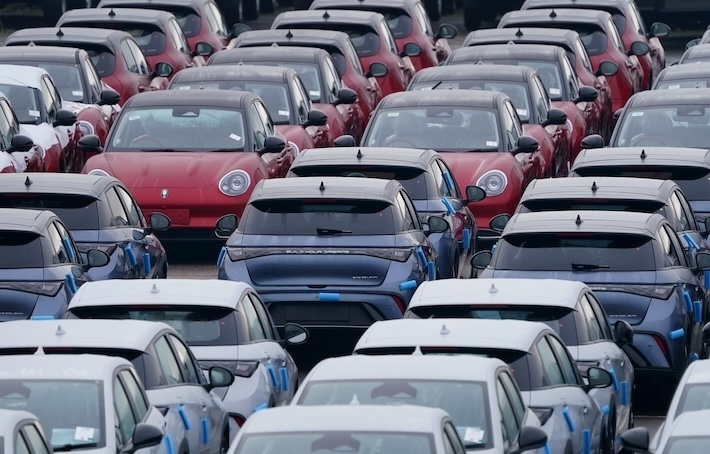
The European Commission proposed conditions on Monday under which companies making electric vehicles in China can avoid tariffs imposed by the EU.
Firms must commit to sell their cars at agreed minimum prices, and the bloc would also take into account Chinese electric-vehicle investments in Europe, said the EC, which released a guidance on the pricing mechanism.
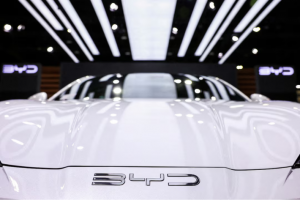
For Beijing, the tariffs of up to 35.3% on EVs are the biggest source of trade tensions with the European Union, while Brussels is keen to protect Europe’s auto industry from an influx of cheaper imports produced by the likes of BYD, SAIC and Geely.
ALSO SEE: EU-India Free-Trade Deal Could be Signed This Month, Merz Says
The two sides have held a series of talks to seek an alternative to the levies.
China favours minimum price commitments from producers, and the Commission said that, following talks with the Chinese commerce ministry, it had issued written guidance on how minimum price offers could replace tariffs.
Prices must eliminate subsidy impacts
The EU executive is still requiring that any offered prices eliminate the harmful effects of subsidies, have an effect equivalent to duties, be practicable and minimise cross-compensation.
China has previously pushed for a broadly applicable minimum price. But the new guidance requires minimum prices for each EV model and configuration, referring to the sales price to the first independent consumer in the EU.
The guidance indicates it would be harder to accept undertakings from companies selling other vehicles, such as hybrids, into the EU due to the risk of cross-compensation.
Chinese hybrid import volumes into the EU were five times higher in the first three quarters of 2025 than a year earlier.
The guidance also said the risk of cross-compensation would be lower if offers included commitments on sales volumes or applied for a limited period.
The Commission began a review last month of a minimum price and import quota offer made by Volkswagen to replace tariffs on the Cupra Tavascan electric SUV it manufactures in China.
China’s commerce ministry broadly welcomed the guidance, saying the EU’s adherence to non-discrimination and objective assessments showed both sides could settle differences through dialogue.
- Reuters with additional input and editing by Jim Pollard
ALSO SEE:
China to Scrap Battery Export Tax Rebates: Lithium Price Surges
BYD Struggles at Home But Record Foreign Sales Help it Beat Tesla
China’s EV Subsidy Era May End As Exports Boom, Priorities Shift
Chinese Firms May Soon Need To Transfer Tech To Invest In Europe
China Making Exports Of Rare Earth Magnets ‘Increasingly Difficult’
Chinese EV Firms Invest More Abroad Than At Home For First Time
EU Says China EVs Funded by Subsidies, Plans Retroactive Tariffs
Chinese EV Firms Find a Way Around EU Tariffs – Selling Hybrids
EU Rejects China’s Proposal for 30,000-Euro Minimum EV Price