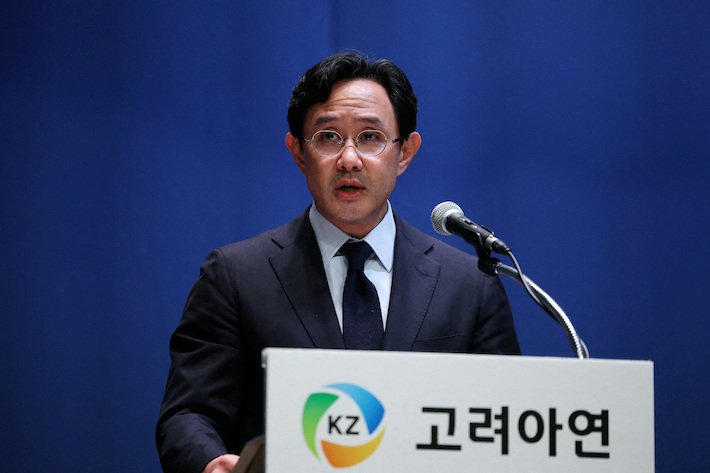
A South Korean court on Wednesday rejected a challenge by two major shareholders of Korea Zinc to block the zinc refiner’s plan to issue new shares to help fund a $7.4-billion smelter in the United States.
The ruling, which clears the way for the project, sent Korea Zinc shares up as much as 5%, but had negative impacts for MBK Partners and YoungPoong, which opposed the plan. YoungPoong’s shares fell as much as 10.5%.
Last week, Korea Zinc, the world’s biggest refined zinc producer, said it would build a $7.4 billion critical minerals refinery in the state of Tennessee that will be largely funded by the US government. The move aims to reduce US reliance on China for materials used in chips, electronics and weapons.
ALSO SEE: Japan Set to Test Mining of ‘Rare Earth Mud’ From Deep Seabed
Under the plan, Korea Zinc will sell shares worth $1.9 billion to a joint venture controlled by the US government and unnamed US-based strategic investors, which would then control around 10% of the South Korean firm.
In a statement, Korea Zinc thanked the court for its decision, adding that it would proceed with its US smelter project and work to enhance corporate and shareholder value.
“We will also seek to contribute to the national economy and South Korea’s economic security as a key player in the critical minerals supply chain,” it said.
Concern on share dilution
Private equity firm MBK Partners and conglomerate YoungPoong, which together hold about 46% of Korea Zinc, said that they were disappointed by the court’s decision, and reiterated their concerns over potential shareholder dilution and the fairness of investment terms.
“Despite this outcome, YoungPoong and MBK Partners intend to support the US smelter project so that it may deliver genuine ‘win-win’ results for the United States, Korea Zinc, and the broader Korean economy,” the pair said in a statement.
In a regulatory filing, Korea Zinc said the Seoul Central Court determined that the transaction was intended to support a US-led restructuring of the global critical minerals supply chain, deepen cooperation between South Korea and the US and secure stable global demand.
The filing noted that the US government sought to take an equity stake through the joint venture to ensure the project’s success, concluding that direct investment or subsidies alone would not be sufficient.
Governance experts say a major beneficiary of the US smelter deal would be Korea Zinc chairman Yun B Choi, who has been locked in a battle for control with MBK and YoungPoong since October last year. Issuing shares to a potential ally could tip the balance of power in Choi’s favour.
Korea Zinc has said the US smelter project aligns Washington’s push to diversify mineral supply chains with the company’s goal of building a growth base by gaining an early foothold in the United States, the world’s largest critical minerals market.
Shares of Korea Zinc and YoungPoong were trading down 2.7% and 10.4%, respectively, compared with a 0.2% drop in the benchmark KOSPI as of 0529 GMT.
LGES to sell Ohio factory to Honda
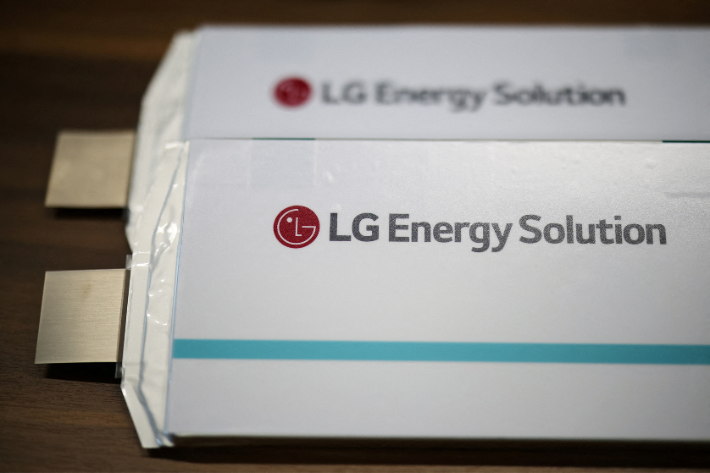
Meanwhile, in other Korea-US news, South Korea’s LG Energy Solution (LGES) said on Wednesday its unit is selling a factory building and assets valued at $2.86 billion located in the US state of Ohio to Honda Development and Manufacturing of America.
The planned deal excludes land and equipment, and is meant to “improve joint venture operational efficiency”, LG Energy Solution said in a regulatory filing.
In 2022, Honda Motor and LGES announced Ohio as the site of their planned $4.4 billion joint-venture battery plant.
The South Korean battery maker is not planning to dissolve the battery factory joint venture or reduce its stake, but plans to sell the assets to better operate the factory, a person familiar with the matter said.
The person added that production at the joint plant is expected to begin next year.
Honda did not immediately reply to a request for a comment.
The decision comes a week after LGES said Ford Motor terminated an EV battery supply deal worth about 9.6 trillion won.
Last week, Ford said it would take a $19.5 billion writedown and scrap several electric-vehicle models, a dramatic example of the auto industry’s retreat from battery-powered models in response to the Trump administration’s policies and weakening EV demand.
Amid slowing EV demand, battery maker SK On ended its joint venture with Ford in the US this month and other South Korean companies have repurposed production lines to produce batteries for energy storage systems for facilities such as data centres.
- Reuters with additional editing by Jim Pollard
ALSO SEE:
Samsung To Make Record Investments At Home Amid US Deal Fears
Seoul Bids to Ease Anger Over Mass Arrests at US Hyundai Plant
Hyundai Raid: How A Visa Loophole Landed Korean Workers In Trouble
S Korea to Invest $450bn in US Projects, Energy; Gets 15% Tariff
Tariffs Spur Big Tesla Deals With LGES Batteries, Samsung Chips
SK Group Eyes Major Overhaul Amid Losses At Battery, Chip Units
S Korea’s Lee Will Try to Pacify Trump With Big Shipbuilding Boost