A well-known AI researcher in the United States has cast doubt on the race for artificial general intelligence (AGI) – and super-intelligence, saying there are physical limits to what computer processors can achieve – and they simply aren’t powerful enough to make that happen.
In a blog post on Friday, Tim Dettmers said “the thinking around AGI and super-intelligence is not just optimistic, but fundamentally flawed.”
Most of the discussion around AGI is philosophical, and while many people believe that GPUs are getting faster and more capable, he says we are rapidly approaching “the limits for digital computation.”
ALSO SEE: Calls For Reform Grow as Chinese Economy Slows in November

While new generations of GPUs – Graphics Processing Units – had got better over many years, they “no longer improve meaningfully” and “we have essentially seen the last generation of significant GPU improvements,” Dettmers said.
“GPUs maxed out in performance per cost around 2018 — after that, we added one-off features that exhaust quickly… further improvements will be trivial and will not add any meaningful advancement.”
Chinese approach ‘more pragmatic’
Dettmers believes the Chinese approach to AI is superior to the US idea “that there will be one winner who takes it all – the one that builds super-intelligence wins.”
The Chinese, he said, believe model capabilities do not matter as much as how you use AI.
“The key indicator of progress is how much AI is integrated into everything and how useful it is. If one model is better than another, it does not automatically mean it will be used more widely. What is important is that the model is useful and yields productivity gains at a reasonable cost.
“If the current approach is more productive than the previous one, it will be adopted. But hyper-optimization for slightly better quality is not very effective. In most cases, settling on ‘good enough’ yields the highest productivity gain.”
Limited impacts from robotics
He argued that the US philosophy was short-sighted and problematic — particularly if the capability of a certain slows.
“The Chinese philosophy is more long-term focused and pragmatic. The key value of AI is that it is useful and increases productivity. That makes it beneficial.”
On the issue of robotics, he said the main problem is that learning follows scaling laws that are similar to the scaling laws of language models.
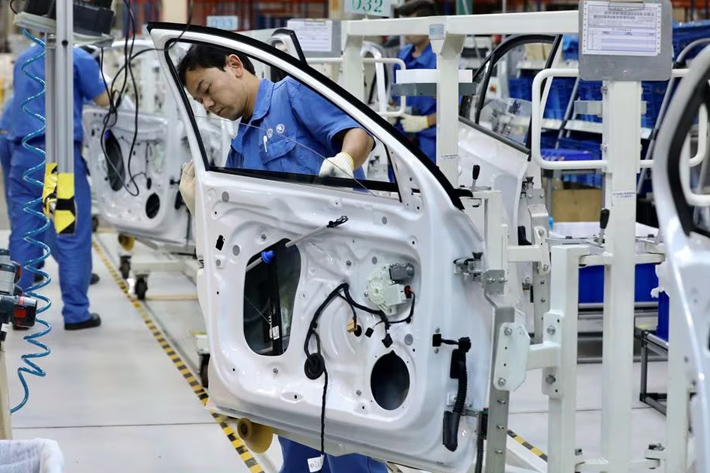
“The problem is that data in the physical world is just too expensive to collect, and the physical world is too complex in its details. Robotics will have limited impacts. Factories are already automated and other tasks are not economically meaningful.”
The concept of super-intelligence was built on a flawed premise, Dettmers said. “This idea treats intelligence as purely abstract and not grounded in physical reality.”
Focus on economic benefits, not AI ‘fantasy’
He believed that “any organization that strives primarily for super-intelligence as a goal will encounter significant challenges and will ultimately falter and be displaced by players that provide general economic diffusion.”
AGI, he said, “will not happen because it ignores the physical constraints of computation, the exponential costs of linear progress, and the fundamental limits we are already encountering.
“Super-intelligence is a fantasy because it assumes that intelligence can recursively self-improve without bound, ignoring the physical and economic realities that constrain all systems.
“These ideas persist not because they are well-founded, but because they serve as compelling narratives in an echo chamber that rewards belief over rigour.”
The future of AI will be shaped by economic diffusion, practical applications, and incremental improvements within physical constraints — not by mythical superintelligence or the sudden emergence of AGI, he said.
“The sooner we accept this reality, the better we can focus on building AI systems that actually improve human productivity and well-being.”
- Jim Pollard
ALSO SEE:
Chinese Firms Fare Worst As Study Finds AI Majors Fail Safety Test
DeepSeek Researcher Pessimistic About AI’s Impact on Humanity
DeepSeek Sharing User Data With China Military, Intelligence: US
Apple Taps Alibaba to Bring AI to Chinese iPhones
‘Big Short’ Wagers $1-Billion Bet That ‘AI Bubble’ Will Burst
AI Bubble Popped by MIT Report Noting Dismal Business Impacts
Altman Agrees the AI Market is a ‘Bubble’ That Could Soon Burst
AI is ‘Effectively Useless,’ Veteran Analyst Warns
Spotlight on Big Tech’s Power and Water Use Amid AI Surge