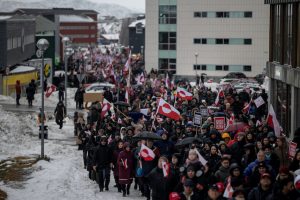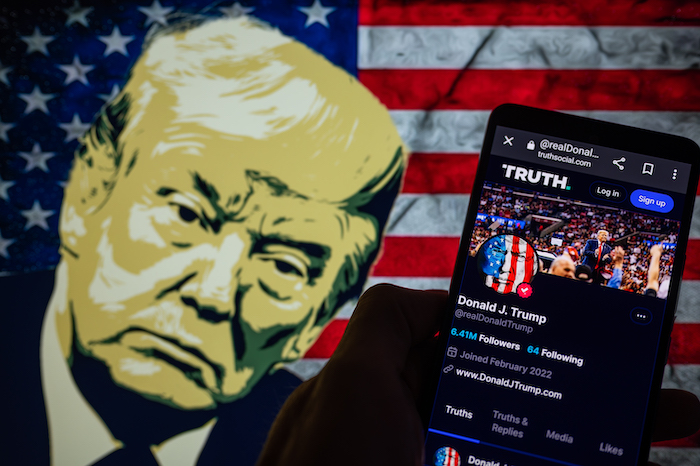
US President Donald Trump was the centre of world attention again on Wednesday after flying to Davos to address the World Economic Forum amid heightened attention over his desire to “acquire” control of Greenland.
Trump’s announcement that he would not use force in his bid to take over the Arctic island from Denmark caused a prompt rebound in global stock markets, which had slumped in previous days after he said Greenland was needed to ensure US security.
“People thought I would use force, but I don’t have to use force,” he said at the WEF’s annual summit in Switzerland. “I don’t want to use force. I won’t use force.”
ALSO SEE: Japanese Bond Market Hammered by Takaichi’s Spending Vows
Trump “took a hectoring tone, chastising the United States’ European allies for the insolence, disloyalty and policy missteps in areas ranging from wind power and the environment to immigration and geopolitics,” Reuters said, noting that his threats toward Europe – and impose tariffs on eight nations – over Greenland had frayed trans-Atlantic ties and worried Europeans.
Denmark was “ungrateful” for rejecting a US takeover, which he described as a “small ask” over a “piece of ice,” while insisting that such a move was no threat to the NATO alliance or Denmark.
And, yes, he was “seeking immediate negotiations to once again discuss the acquisition of Greenland by the United States.”
“So they have a choice,” he said. “You can say yes, and we will be very appreciative. Or you can say no, and we will remember.”
Journalists also noted that Trump mistakenly referred to Greenland as Iceland several times during his speech, which lasted over an hour.
Cut ties with US, Chinese media urges
China, meanwhile, was doing its best to reassure the world it had absolutely no intention to vie for control of Greenland.
Asked if Beijing welcomed the “chaos” over Greenland, a spokesperson of the Chinese foreign ministry, Guo Jiakun, told a regular news briefing, “We have no intention of competing for influence with any country, nor would we ever do so.”
Guo said they only engage in “friendly exchanges” with all nations “on the basis of mutual respect and equality.” And they are “committed to being a positive, stabilising and constructive force.”
The usual stuff. However, China’s state media were far more blunt.
The Global Times said Europe had grown excessively dependent on the United States while sidelining cooperation with “partners” such as China and Russia.
And the China Daily said in an editorial that Europe should boost its strategic autonomy and diversify its partnerships.
“The situation underscores the necessity for Europe to review the nature of transatlantic relations and reduce its reliance on the United States as a pillar of support for its security.
Cutting ties with the US would help Europe to “ensure that its future is not dictated by the diktats of a bully, but is instead shaped by its collective interests.”
Carney lauded for realistic stance
However, a speech by Canadian Prime Minister Mark Carney on Tuesday appeared to resonate far more strongly among the business chiefs assembled in Davos, winning a standing ovation.
Carney said the “old world order was not coming back” and there was no point mourning its end or hoping that multilateralism would continue. Instead, smaller countries need to band together to avoid being overpowered by larger nations.
Middle power nations, like his, were not powerless, but just needed to build a new world order based on new alliances and shared interests. And he surely had the most notable quote of the day.
“Middle powers must act together because if you are not at the table, you are on the menu.”
“This is not naive multilateralism,” Carney said. “Nor is it relying on diminished institutions. It is building the coalitions that work, issue by issue, with partners who share enough common ground to act together. In some cases, this will be the vast majority of nations.
“And it is creating a dense web of connections across trade, investment, culture on which we can draw for future challenges and opportunities.”
In an era of great power rivalry, the Canadian was surely on the money.
Shortly after Trump’s speech, the EU said it had suspended its trade deal with the United States, while talks on the US push for Greenland are expected to begin shortly.
- Jim Pollard
NOTE: This report was updated and the picture at the top changed on Jan 22, 2026.
ALSO SEE:
Markets Rocked by Trump Tariff Threats to EU Over Greenland
EU Strikes a Pricey Deal With Trump to Avert a Trade War
Prabowo Central Bank Move Sends Indonesian Rupiah to New Low
Cybercrimes Now Reaping Trillions of Dollars a Year, UNODC Says
China, India See First Drop in Coal Power Use in Half a Century
China Posts Record $1.2 Trillion Trade Surplus Despite US Tariffs
Trump’s ‘Tariff on States Trading With Iran’ Could Kill China Truce
Bets on Snap Election Push Japanese Stocks to Record High
Unrest Widens in Iran: Internet Shut Amid Riots, Fires in Cities
Trump’s Venezuela Strike ‘May Embolden China’s Territorial Claims’