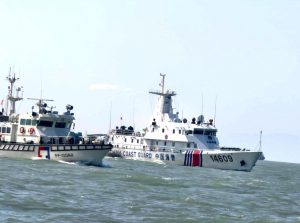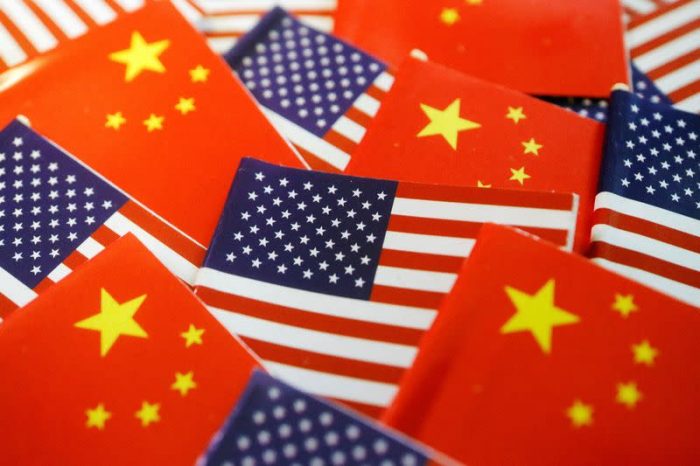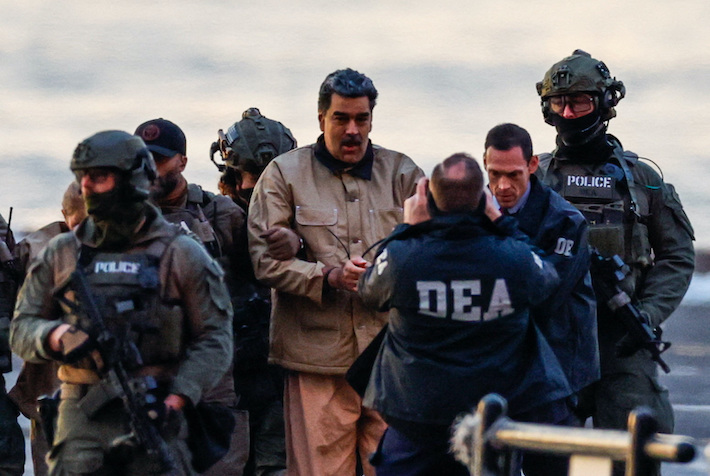
Analysts believe the US attack on Venezuela will embolden China to strengthen its territorial claims over areas such as Taiwan and parts of the South China Sea.
But they don’t expect it to speed up a potential invasion of Taiwan. President Xi Jinping’s considerations about Taiwan and his timeline are separate from the situation in Latin America, and are likely to be influenced more by China’s domestic situation than by US actions, they said.
Still, analysts said, President Donald Trump’s audacious attack on Saturday, capturing Venezuelan leader Nicolas Maduro, hands China an unexpected opportunity that Beijing will likely use in the near term to amplify criticism of Washington and bolster its own standing on the international stage.
ALSO SEE: India ‘Could Face Higher Tariffs if Russian Oil Buying Continues’
Further out, Beijing could leverage Trump’s move to defend its stance against the US on territorial issues, including Taiwan, Tibet and islands in the East and South China seas.
‘Naked hegemonic behaviour’
“Washington’s consistent, long-standing arguments are always that the Chinese actions are violating international law but they are now damaging that,” said William Yang, an analyst at International Crisis Group, a Brussels-based NGO.
“It’s really creating a lot of openings and cheap ammunition for the Chinese to push back against the US in the future.”
China claims democratically governed Taiwan as its own province – an assertion the island’s government rejects – and claims almost all of the South China Sea, a position that puts it at odds with several Southeast Asian nations that also claim parts of the vital trade route.
China’s foreign ministry and Taiwan Affairs Office, and Taiwan’s presidential office did not immediately respond to requests for comment.
Beijing condemned Trump’s strike on Venezuela, saying it violated international law and threatened peace and security in Latin America. It has called for the US to release Maduro and his wife, who are being detained in New York awaiting trial.
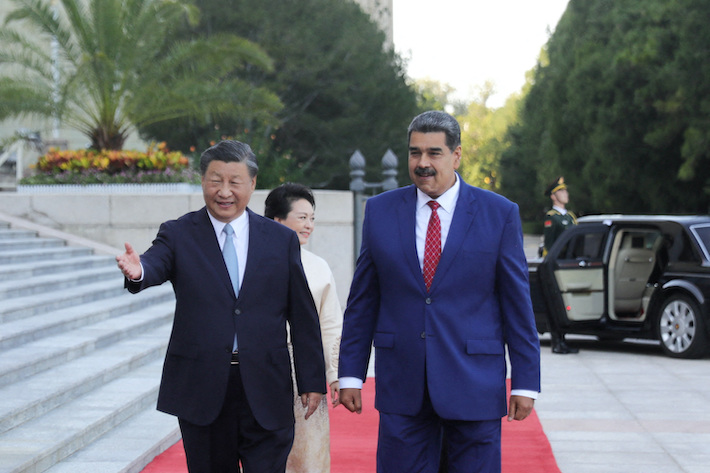
Hours before his capture, Maduro met with a high-level Chinese delegation in Caracas, according to photos he posted on his Instagram page.
The Chinese foreign ministry did not immediately respond to a request for comment on the whereabouts of the delegation, which included China’s special representative for Latin American and Caribbean affairs, Qiu Xiaoqi.
On Sunday, China’s official Xinhua news agency called the US attack “naked hegemonic behaviour.”
“The US invasion has made everyone see more and more the fact that the so-called ‘rules-based international order’ in the mouth of the United States is actually just a ‘predatory order based on US interests’,” state-run Xinhua news agency said.
US move ‘could help justify Taiwan takeover’
Taiwan, in particular, has been facing growing pressure from Beijing. China last week encircled the island in its most extensive war games to date, showcasing Beijing’s ability to cut off the island from outside support in a conflict.
But analysts said they did not expect China to capitalise on the Venezuelan situation to escalate that into an attack anytime soon.
“Taking over Taiwan depends on China’s developing but still insufficient capability rather than what Trump did in a distant continent,” said Shi Yinhong, professor of international relations at Renmin University in Beijing.
Neil Thomas, a fellow on Chinese politics at the Asia Society, said China sees Taiwan as an internal affair and so was unlikely to cite US actions against Venezuela as a precedent for any cross-strait military strikes.
“Beijing will want a clear contrast with Washington to trumpet its claims to stand for peace, development and moral leadership,” Thomas said. “Xi does not care about Venezuela more than he cares about China. He’ll be hoping that it turns into a quagmire for the United States.”
Wang Ting-yu, a senior lawmaker from Taiwan’s ruling party who sits on the parliament’s foreign affairs and defence committee, rejected the idea that China might follow the US example and strike Taiwan.
China has never lacked hostility toward Taiwan, but it genuinely lacks the feasible means,” Wang posted on Facebook. “China is not the United States, and Taiwan is certainly not Venezuela. If China could actually pull it off, it would have done so long ago!”
Still, the situation amplifies risks for Taiwan and could press Taipei to seek more favour from the Trump administration, some observers said.
On China’s Weibo social media platform, discussions of the US attack trended heavily on Sunday, with several users saying Beijing should learn from what Trump did.
Lev Nachman, a political science professor at National Taiwan University, said he expected Taiwan’s government to express lightly worded support for American action on Venezuela. Taiwan has not yet made any statement.
“What I do think Trump’s actions could do is to help Xi Jinping’s narrative in the future to create more justification for action against Taiwan,” he said.
China to tally the billions it lent to Venezuela
In related news, China’s top financial regulator asked its policy banks and other major lenders to report their lending exposure to Venezuela after the US capture of Maduro, Reuters said, citing a report by Bloomberg on Monday.
The National Financial Regulatory Administration also advised banks to strengthen risk monitoring of all Venezuela-related credit, seeking to assess potential dangers to China’s lenders, the report added. The NFRA did not immediately reply to a Reuters request for comment.
China has reportedly extended credit lines to Venezuela for years under loans-for-oil deals. So, the NFRA’s move highlights growing concerns among regulators over potential shocks to the banking sector as geopolitical risks mount.
Billions in loans have been extended over the past decade by China to the South American country, primarily led by policy banks such as China Development, the report added.
China’s foreign ministry on Monday reiterated Beijing’s stance on the situation after the US attack and called for the immediate release of Maduro.
Meanwhile, the ouster of Maduro is set to swiftly reroute Venezuela’s oil exports back toward the United States – and away from China, according to Reuters columnist Ron Bousso, who said the move would give US refiners an immediate boost, but President Trump’s plans to revive production in the Latin American country may be slower to materialise.
Maduro to face NY court
Maduro was due in a New York court on Monday to face drug charges while the UN was set to debate the legality of the US’s extraordinary operation to capture him. While Trump denounced Maduro as a dictator and drug kingpin who allegedly flooded the US with cocaine, he also made no bones about wanting to share in Venezuela’s oil riches.
It has the world’s largest reserves – about 303 billion barrels, mostly heavy oil in the Orinoco region. But the sector has long been in decline from mismanagement, under-investment and US sanctions, averaging 1.1 million bpd output last year, a third of its heyday in the 1970s.
After first denouncing Maduro’s capture as a colonial oil-grab and “kidnapping”, Venezuela’s acting president Delcy Rodriguez changed her tune on Sunday, saying it was a priority to have respectful relations with Washington.
“We invite the US government to work together on an agenda of cooperation,” Rodriguez said. “President Donald Trump, our peoples and our region deserve peace and dialogue, not war.”
- Reuters with additional editing by Jim Pollard
ALSO SEE:
Continuing AI Demand Lifts Asian Stocks to Five-Year Highs
Meta to Buy Chinese-Founded AI Startup Seen as ‘Next DeepSeek’
Cosco Demand ‘May Kill $23bn BlackRock Bid for Hutchison Ports’
China’s Big Tech Secret: Lab Copied Dutch Chipmaking Machine
Surge in Solar Power, Data Centres Spurs Battery Boom in China
Japan Set to Test Mining of ‘Rare Earth Mud’ From Deep Seabed
Japan Repeats No-Nukes Pledge After Weapons Idea Floated
Mexico Approves Big Tariff Hikes on Chinese, Other Asian Imports