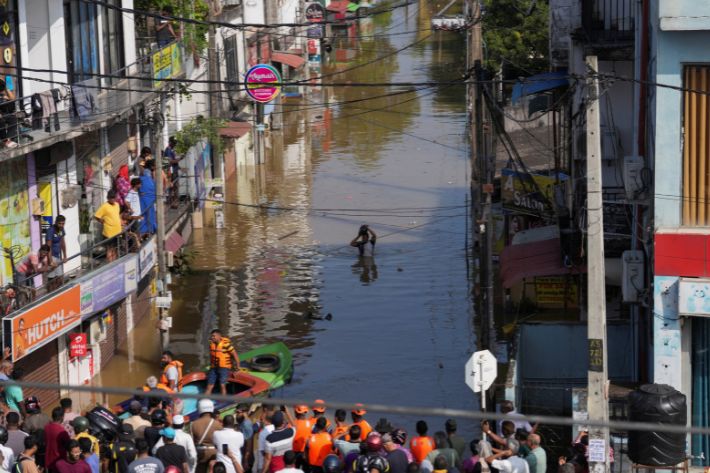
Authorities in Indonesia, Sri Lanka, Thailand and Malaysia say the death toll from flooding and landslides in recent days has exceeded 1,100 citizens.
And that figure is expected to rise even higher, given that hundreds more are missing in several of these countries.
Some 604 people died in Indonesia, the country’s National Disaster Management Agency said on Monday, while at least 355 were killed in Sri Lanka by downpours from cyclone Ditwah, and another 176 perished in southern Thailand.
ALSO SEE: China Vanke Gets S&P Downgrade, Faces Rejig Amid Debt Crisis
In Southeast Asia, more than 4 million people have been affected — close to 3 million in southern Thailand and 1.1 million in Sumatra and western parts of Indonesia.
Most of the deaths in Thailand were in Songkhla province in the far south, where provincial officials have said tourism industry losses alone could be as high as 7 billion baht ($219 million).
Hat Yai, the biggest city in the region, was hit by a record downpour 10 days ago, with 335 mm (13 inches) of rain on November 21 – the highest single-day tally in 300 years.
The city’s drainage systems were overwhelmed by some 630 mm, which fell over the three days from November 19 to 21.
Teams ‘blocked from collecting bodies’
There has been heated debate about the Thai death toll, with rescue volunteers complaining on social media over the weekend that only a relatively small number of people were evacuated to official shelters – saying the tally could exceed 500, depending on how officials register the deaths.
Anyawuth Phoamphai, an operations chief with the Ruamkatanyu Foundation, a well-known rescue service, wrote on Facebook that authorities had blocked teams from removing bodies from affected areas.
“They don’t want to tell the truth. They don’t want us to take the bodies out to add more [to the official count],” Mr Anyawuth, was quoted as saying by the Bangkok Post.
Several thousand Malaysian tourists who were stuck in the city for at least a week were only able to return home on the weekend. There was flooding in seven states in Malaysia, but just a handful of deaths reported.
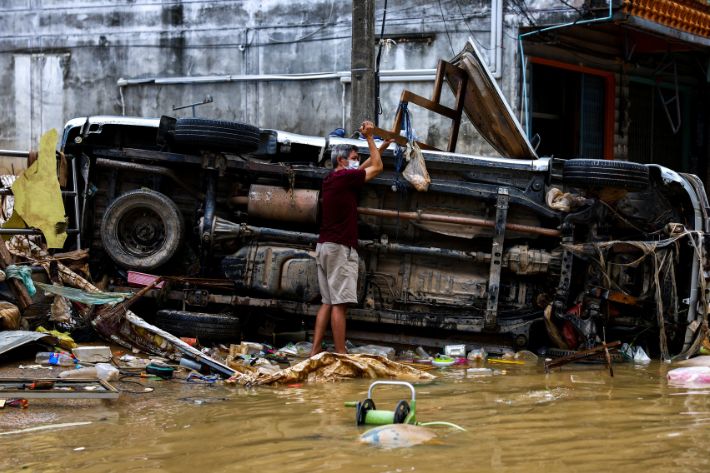
For the past few days, the streets of Hat Yai have had huge piles of water-damaged goods, plus furniture and other household items people have been trying to sell, as well as cars and motorbikes that owners are trying to salvage.
More intense storms
In Indonesia, the western island of Sumatra was the hardest hit by Cyclone Senyar last Wednesday. Officials said on Monday that more than 578,000 citizens were evacuated from homes in three provinces and over 500 more are still missing.
Power had been restored in West Sumatra, but North Sumatra and Aceh were still without electricity, Deputy Minister of Energy and Mineral Resources Yuliot Tanjung was quoted as telling Antara, the state news agency.
The flooding in Sumatra is reportedly the deadliest event in Indonesia since an earthquake in 2018.
Weather experts have said warmer oceans are one of the reasons Asia is experiencing more intense storms, which are causing more severe downpours.
Cyclones like Senyar don’t normally form so close to the equator, according to an Australian academic, who said “there’s [usually] not enough Coriolis force from Earth’s rotation at the equator to spin storms into their classic cyclonic structure.”
But , an Adjunct Professor of Environmental Geography at CQ University, said it would take time to verify if there was a “climate link” to the latest storms.
“But we do know climate change is projected to trigger fewer cyclones overall, but with higher intensity,” he said in a report in The Conversation.
The Northwest Pacific Basin had the largest, most frequent and most intense tropical cyclones. Several had hit the Philippines and southern China this year.
One reason they had caused so much damage, he said, was because they had hit Indonesia and Malaysia, which were countries where cyclones are more rare.
Cyclones were often smaller and less common in the northern part of the Indian Ocean, Turton said, but Ditwah, the cyclone that just struck the east coast of Sri Lanka, did serious damage.
Sri Lankan President Anura Kumara Dissanayake described the floods as the “largest and most challenging natural disaster in our history.” Although that may be an overstatement, given about 31,000 citizens died there after the 2004 tsunami that rocked countries all around the Indian Ocean.
Meanwhile, activists have been complaining that outcomes from the latest COP30 summit in Brazil have failed to ensure adequate responses to the pace of global warming and the damage being done by increasingly severe storms, after oil-exporting nations such as Saudi Arabia and others dependent on fossil fuels refused to back more meaningful actions.
- Jim Pollard
NOTE: This report was updated on December 2, 2025 to correct the overall death toll and do minor edits.
ALSO SEE:
Waves of Record Rainfall Swamp Southern Thailand, Malaysia
Carbon Removal Credits in Short Supply As AI Firms Step Up Demand
EU To Reject India’s Demand For Carbon Tax Exemption
Climate Chaos ‘Could Disrupt Half of Global Chipmaking by 2050’
Asia’s Billion-Dollar Carbon Boom?
India’s Green Transition In A Chokehold
As Typhoons Lash Southeast Asia, COP30 Hunts Adaptation Finance
Central Banks Unprepared For Climate-Driven Labour Shocks: LSE
Firms Underestimating Risks From Carbon-Fuelled Climate Change
Carbon Removals Not Growing Fast Enough For Climate Goals
Firms May Abandon Net-Zero Plans Amid Carbon Offset Uncertainty