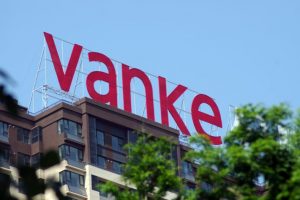
Credit analysts have suggested that China Vanke, the debt-laden state-backed building giant, is likely to copy the strategies of other cash-strapped Chinese developers in its bid to avoid a court-ordered debt rejig.
Other troubled builders have sought multiple short-term extensions for their bond repayments before ultimately proposing a debt restructuring.
Vanke surprised the market last month by seeking a public bond extension for its 2 billion yuan ($284 million) note that was due on December 15 by a year – despite getting a loan infusion of 22 billion yuan from major shareholder Shenzhen Metro, a company owned by the Shenzhen government, this year.
ALSO SEE: Surge in Solar Power, Data Centres Spurs Battery Boom in China
That effort failed and bondholders again resoundingly rejected Vanke’s sweetened proposal on Monday to delay repayment. But the developer narrowly dodged a default, because they approved a plan to extend the grace period of the bond repayment to 30 trading days from five.
Vanke’s proposals required at least a 90% approval rate to pass. The grace period extension plan achieved 90.7%, while the sweetened proposal that offered to pay overdue interest and add credit enhancements to postpone principal payments was rejected with 78.3% opposing it.
The overwhelming rejection rate shows bondholders were disappointed by the lack of upfront cash payment and principal amortisation, analysts said, as they saw in previous cases where developers had repeatedly extended repayments when they became due.
They expected similar voting results for Vanke’s 3.7 billion yuan onshore note due December 28 (next Sunday), in which the developer is also seeking to delay the principal and interest payments by a year and extend the note’s grace period to 30 trading days. Voting started on Monday and is due to conclude on Thursday.
“It is ultimately up to Vanke to decide whether to implement the proposal. So, execution risk is high,” Zerlina Zeng, head of Asia credit strategy at CreditSights, said.
“We think Vanke may request to extend the grace period multiple times until it enters a holistic debt restructuring.”
A Shanghai-based investor who sold off his Vanke yuan bonds earlier this month also expected the firm to default sooner or later. “Credit enhancement won’t help; just look at other developers like Sunac,” he said.
In a landmark deal in late 2024, after several repeated bond extensions, Sunac proposed a debt-to-equity swap and steep haircuts for its onshore debt, with an aim to cut the debt size by more than half. It implemented the deal this year.
Test case for local governments
Hit by a liquidity crisis since 2021, China’s highly indebted developers began tackling the restructuring of offshore bonds in 2022. But for politically sensitive onshore bonds, they have repeatedly extended maturities, pinning their hopes on a pickup in cash flow that has failed to materialise so far.
A credit default by Vanke, formerly China’s biggest developer by sales, could knock homebuyer confidence in the country’s top-tier cities, which are the company’s focus areas and where house prices have been stabilising.
Vanke is now seen as a test case for how much local governments are willing to backstop distressed firms from slipping into defaults.
A default and restructuring by Vanke could also spell more trouble for local state-owned enterprises, many of which are under financial strain, including local government financing vehicles (LGFVs), market participants said, if policymakers adopt a higher tolerance to non-payment rates.
Shenzhen Metro agreed this year to provide loans, provided that Vanke pledges collateral. But the support is insufficient to cover Vanke’s 364.3 billion yuan of borrowings.
China International Capital Corporation (CICC) had been brought in to assess Vanke’s debt, sources have told Reuters, and a debt restructuring was among the options the investment bank featured in an internal report to the central government.
“Shenzhen Metro signalled dwindling support, Vanke cannot rely on government help anymore; it will need to come up with other ways to solve the problem,” said Steven Leung, director of UOB Kay Hian, who suggested a restructuring with haircuts would be ideal to cut debt and ease repayment pressure.
- Reuters with additional editing by Jim Pollard
ALSO SEE:
Fitch Downgrades China Vanke Amid Heightened Default Risk
China Vanke Gets S&P Downgrade, Faces Rejig Amid Debt Crisis
Huge HK Fire Adds to a Bad Day For China’s Property Sector
China’s Boom and Bust Real Estate Giant Won’t be Missed
Hundreds of Evergrande Investors Press Chinese Officials for Help
Chinese Clients Ditching PwC After China Evergrande Fiasco
China’s Property Debts Seen Weighing Down Economy for Years
Court Orders China Evergrande Liquidation to Pay its $300bn Debts
Evergrande Chief’s Two Luxury Mansions ‘Seized by Creditor’
China’s Local Governments Slow to Act on Property Crisis
Sunac China Seeks Bankruptcy Protection After Debt Deal Nod