Indonesian President Prabowo Subianto warned again this week that his government would intensify a nationwide crackdown on corruption and environmental crimes.
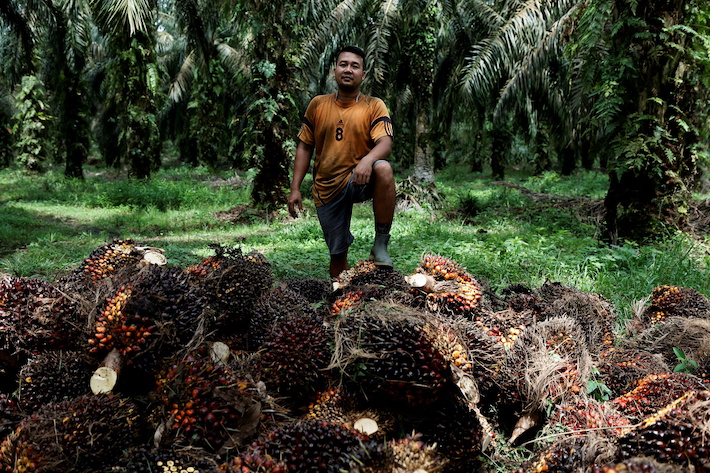
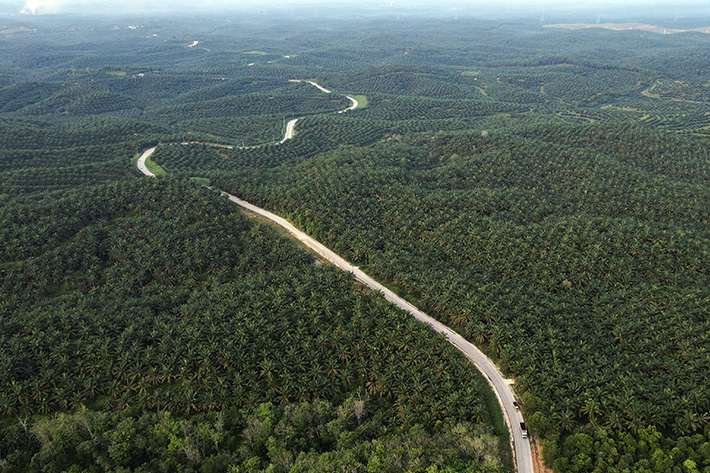
He also signalled his intention to smash the operators of illegal palm oil plantations, saying that authorities could seize a further 4-5 million hectares (12 million acres) of plantations this year. That is a land area bigger than Switzerland.
In a speech at the Attorney General’s Office in Jakarta two weeks ago, Prabowo said he believed many forest areas had been illegally controlled for years by unscrupulous business operators, and that potential state losses could be enormous if left unaddressed.
ALSO SEE: ‘Scam Billionaire’ Chen Zhi Arrested in Cambodia, Flown to China
“This is just the beginning. If thoroughly examined, potential state losses could reach hundreds of trillions … They dared to insult the state, assuming officials at every level could be bought and bribed,” he was quoted as saying by state news agency Antara.
On Wednesday (Jan 7), Jakarta’s ‘strong man’ leader was at it again, saying it was his duty as president to protect state finances and ensure that no amount of public money is lost to corruption.
Last year, the Forest Area Control Task Force, made up of military officers, police and state prosecutors, took over 4.1 million hectares said to be operating illegally in forest areas, targeting major palm oil companies and smallholder farmers alike.
“We have controlled, have taken over 4 million hectares of palm oil plantations that have violated the laws. Isn’t that right, state attorney?” Prabowo said at a rice harvest ceremony with farmers.
“In 2026, maybe we will seize 4 or 5 million more,” he said, repeating a threat he made in his first state of the nation speech last August, before he formally took power in October.
At that time, he explained that some 5 million hectares of palm plantations have been under scrutiny for operating in protected forest areas, as well as not reporting their actual size, or not responding to summons from auditors.
Aggressive tactics unnerving several sectors
Prabowo, a former special forces commander known for his aggressive operational tactics, flagged his tough approach last August, saying the state could confiscate assets of companies that “manipulate and violate” Indonesia’s laws.
He said his government was also planning a crackdown on mining, adding that authorities had received reports of as many as 1,063 illegal operations throughout the vast, mineral-rich archipelago.
He did not specify what type of mines or the commodities they were extracting. Indonesia is also the world’s biggest producer of nickel and a major producer of thermal coal, tin, and copper.
On Wednesday, the president said the government has also taken action against hundreds of illegal mining operations, saving the state hundreds of trillions of rupiah through enforcement and asset recovery.
“We have acted against hundreds of illegal mines and saved hundreds of trillions,” he was quoted as saying by Antara, adding that authorities would continue pursuing losses to ensure public funds fully benefit Indonesians.
Not surprisingly, the military-backed campaign launched in early 2025 has unnerved the palm oil industry. The Southeast Asian nation is the world’s biggest producer of palm oil and has a total of 16.8 million hectares of palm oil plantations.
Analysts have also predicted that in combination with Indonesia’s ambitious biodiesel plans, the seizures could put even more upward pressure on global prices by disrupting production.
In August, Indonesian Palm Oil Association (GAPKI) chief Eddy Martono questioned the source of Prabowo’s figures, saying his organisation had not been consulted on the 5 million hectares number.
He said companies and cooperatives running the 3.7m hectares of plantations found to be operating illegally at that time had been asked to clarify their status and some had permits such as land-use concessions and ownership certificates.
But by the end of 2025, some 1.7 million hectares of the seized plantations were transferred to state-owned company Agrinas Palma Nusantara, transforming the firm from an infrastructure services company to the world’s largest palm oil company by area.
And Attorney General Sanitiar Burhanuddin said last month the government could collect $6.5 billion in fines from palm oil companies implicated in last year’s seizure.
Concern on other fronts too
These developments look positive, but there is also concern about the new president’s push to expand his power and the military’s role in civilian affairs, as well as his family’s business dealings.
The president himself is said to own half a million hectares, including land in Sumatra that was ravaged by flooding and landslides, where about 1,150 people died, according to a report by Asia Sentinel.
A corruption watchdog has voiced fears on where all this leads, and perhaps inevitably – whether Indonesia might experience a replay of the levels of graft that occurred when the country was ruled by Prabowo’s father-in-law, Suharto.
- Jim Pollard with Reuters
NOTE: Further text was added to the bottom of this report and the forest image amid the text changed on Jan 8, 2026.
ALSO SEE:
Microplastics Hindering Oceans’ Ability to Absorb CO2, Study Says
Indonesians Win Right to Sue Swiss Cement Giant For Emissions
Swarm of Cambodian Drones Could Kill Ceasefire With Thailand
Prabowo Cuts Lawmakers’ Benefits After Riots in Indonesia
Solar Power Boom Surging in Indonesia, Australia, Africa
Water War: India Plans Dam to Counter China’s Mega Dam in Tibet
Indonesia Pays High Price for US Trade Access, Faces 19% Tariffs
Indonesia Moves to Block China’s Temu to Protect Small Merchants