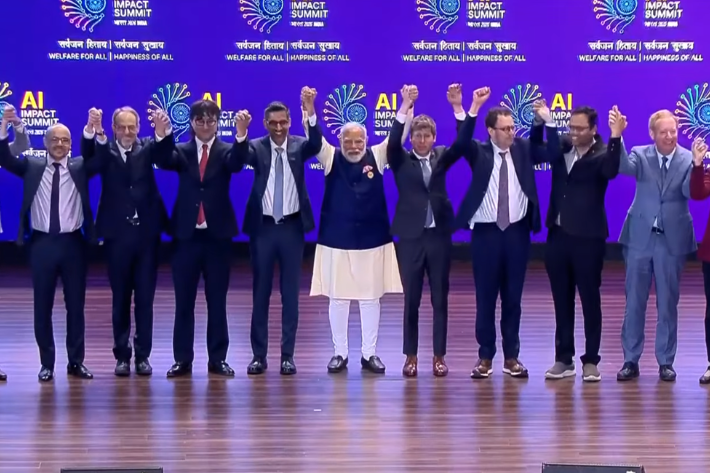
Artificial intelligence urgently needs to be regulated, OpenAI head Sam Altman conceded on Thursday at a summit in New Delhi on the impacts, risks and opportunities from the fast-evolving technology.
A giant wave of demand for generative AI has ignited a stock boom for a swag of tech companies, but many analysts and AI insiders say it has also fuelled global anxiety about the potential for grave impacts on humanity and the planet.

The admission by Altman – the founder and CEO of one of America’s leading AI research and deployment firms – in regard to the risks of AI was relatively brief, unlike some other speakers at the summit.
“Centralisation of this technology in one company or country could lead to ruin,” he said. “This is not to suggest that we won’t need any regulation or safeguards. We obviously do, urgently, like we have for other powerful technologies.”
ALSO SEE: Potential Peak in China Carbon Emissions Sparks Hope and Worry
A far stronger warning came from Stuart Russell, a professor from the University of California, Berkeley, who said on Tuesday that tech CEOs are locked in an AI “arms race” that risks wiping out humanity.

Russell is a British professor of computer science and engineering, and director of the Center for Human-Compatible AI. He is the co-author of a textbook that advocates safe and beneficial AI.
At the summit two days ago, he said the heads of the world’s biggest AI companies understand the dangers posed by super-intelligent systems that could one day overpower humans.
For him, the onus to ensure humanity survives rests on world leaders who can take collective action.
“For governments to allow private entities to essentially play Russian roulette with every human being on earth is, in my view, a total dereliction of duty,” he said.
Russell is obviously a prominent voice on AI safety, but there is still doubt on whether machines can actually become super-intelligent.
However, some of the anxiety relates to the fact that China and the United States have both refused to rule out the use of AI in military activities.
Modi urges AI use for ‘common good’
The AI Impact Summit is the fourth annual gathering to discuss how to handle advanced computing power.
It is the largest yet and the first in a developing country, with India taking the opportunity to push its ambitions to catch up with the United States and China in the AI race.
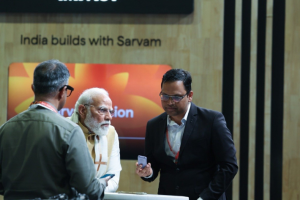
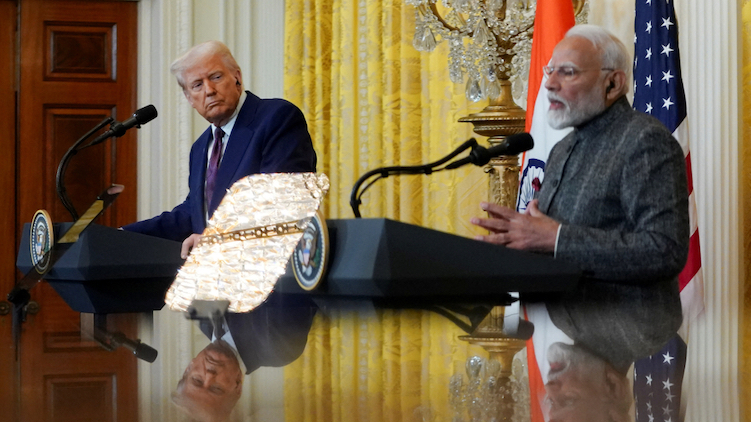
“We must democratise AI. It must become a medium for inclusion and empowerment,” Prime Minister Narendra Modi told the gathering on Thursday.
“We are entering an era where humans and intelligence systems co-create, co-work and co-evolve,” he said. “We must resolve that AI is used for the global common good.”
AI for everyone, not just billionaires: UN chief
Modi’s comments were echoed by UN Secretary-General Antonio Guterres, who called on tech tycoons to support a $3 billion global fund to ensure open access to AI.
“AI must belong to everyone,” Guterres said.
“The future of AI cannot be decided by a handful of countries – or left to the whims of a few billionaires,” he said.
Researchers and campaigners say stronger action is needed to combat emerging issues, from job disruption to online abuse and the huge electricity demands from data centres.
But the broad focus of the New Delhi event, and vague promises made at previous summits, could make concrete commitments unlikely.
Google’s Sundar Pichai and Anthropic’s Dario Amodei were among the other tech CEOs to speak. The latter had an awkward moment when he found himself standing beside Altman, his former boss. Relations between the pair appear to still be strained: they were unable to hold hands when a group photo was taken.
#WATCH | Delhi | Prime Minister Narendra Modi, along with global tech leaders including the CEO of Google and Alphabet, Sundar Pichai, CEO of OpenAI, Sam Altman, Alexandr Wang, Chief AI Officer of Meta, CEO of Anthropic, Dario Amodei pose for a group photograph at the India AI… pic.twitter.com/GccXlG9rRx
— ANI (@ANI) February 19, 2026
Huge investment pledges
World leaders have joined tens of thousands of people from across the sector at the summit. Last year’s host, French President Emmanuel Macron said he was determined to ensure safe oversight of AI.
“Europe is not blindly focused on regulation – Europe is a space for innovation and investment, but it is a safe space,” he said, according to AFP.
US Vice President JD Vance warned in Paris last year against “excessive regulation” that “could kill a transformative sector”. But this year’s US delegation has kept a low profile.
India expects more than $200 billion in investments over the next two years, and US tech titans have unveiled new deals and infrastructure projects this week.
OpenAI and Indian IT giant Tata Consultancy Services (TCS) announced on Thursday that they would build hyperscale AI data centre capacity in India.
That followed Adani Group’s announcement on Tuesday that it plans to invest $100 billion over the next decade to build “AI-ready data centres” powered by renewable energy.
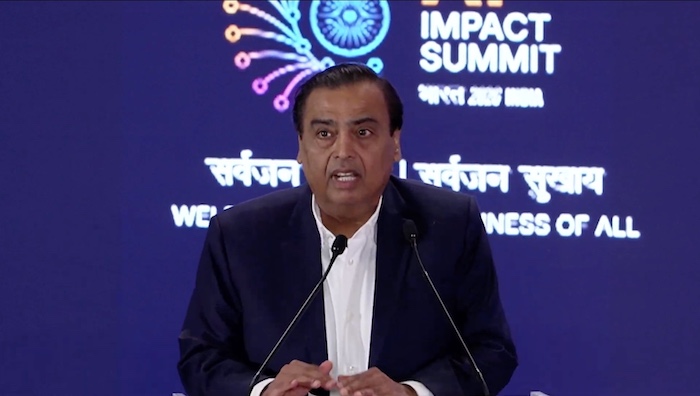
And that was topped on Thursday by Mukesh Ambani, Asia’s richest man, who said that his conglomerate, Reliance, would spend $110 billion on data centres and computing.
Google said on Wednesday it plans to lay subsea cables from India as part of an existing $15 billion AI infrastructure investment.
US chip behemoth Nvidia – the world’s most valuable company – also said it was teaming up with Indian cloud computing firms to provide advanced processors for data centres that can train and run AI systems.
Power-hungry AI data centres are under construction worldwide on a massive scale as companies race to develop super-intelligent systems.
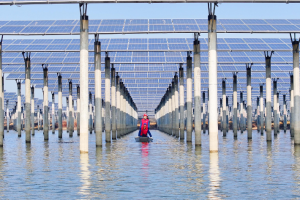
The increased demand for electricity, and water to cool hot servers, have sparked alarm at a time when nations have pledged to decarbonise grids to tackle climate change.
Don’t forget the 318m starving: WFP
India leapt to third place last year in an annual global ranking of AI competitiveness calculated by Stanford researchers, although experts say it has a long way to go before it can rival the United States and China.
Leaders are expected to deliver a statement on Friday about how they plan to handle AI technology.
One fear is disruption to the job market – especially in India, where millions of people are employed in call centres and tech support services.
“We will prove that AI does not take away jobs. Rather, it will create new high-skilled work opportunities,” Ambani said on Thursday.
Amid these dizzying billion-dollar deals, there was a timely reminder from a top UN official about the world’s record level of hunger and shrinking donor support.

Carl Skau, deputy chief of the World Food Programme, who is also at the summit, said he hoped AI can help save cash and stop millions dying of hunger, as funding for the largest global food aid agency has been collapsing.
“We are struggling everywhere,” Skau told AFP, because its funding pipeline has been slashed, despite record global food insecurity.
“Not enough attention really is given to the global food security crisis and to how those of us trying to address it are struggling at the moment.”
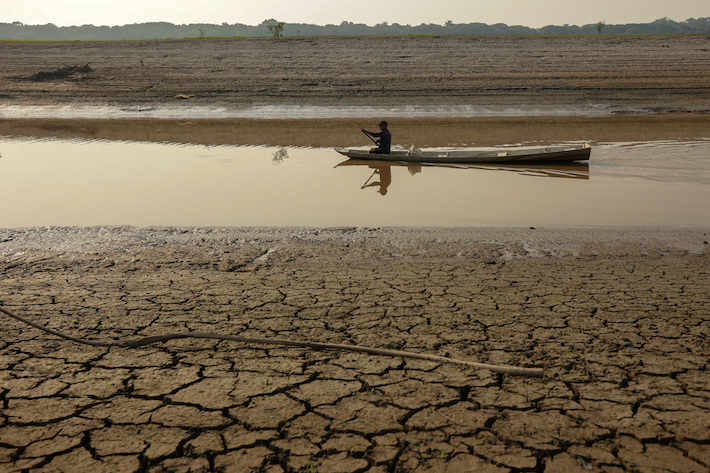
WFP says 318 million people face acute levels of hunger this year in 68 countries. That number has risen dramatically over the past five years because of overlapping shocks: wars disrupting supply chains, fertiliser and fuel costs rising, and harvests failing in climate-vulnerable regions.
US President Donald Trump slashed foreign aid after taking office last year, dealing a heavy blow to humanitarian operations worldwide.
Skau said he hoped that AI could help stretch diminishing resources by optimising delivery routes, predicting crop failures and identifying communities most at risk.
WFP’s data chief Magan Naidoo said AI tools were helping how aid was delivered, number crunching data and complex logistics to ensure “greater efficiency” over distribution systems and improve targeting.
“This is critical at a time when funding is plummeting,” he said, suggesting AI can improve WFP operational efficiency and predictive accuracy by as much as 30 to 50%.
- Jim Pollard with Agence France-Presse.
ALSO SEE:
China, US Opt Out of Global Pledge on AI Use in Military Domain
4,000 CEOs Say No Impact From AI: Study Spurs Huge Selloff
India’s Tougher Rules on AI in Social Media Spur Censorship Fears
Tech Leaders Fly to India For AI Summit Amid a Raft of Concerns
ByteDance Vows Changes Amid Hollywood Anger Over AI Video Model
Nvidia AI Chip Sales to China Delayed Again on Security Review
Amazon, Microsoft Set to Spend Over $50 Billion on AI in India
Google To Build $15bn AI Data Centre In Biggest India Investment
The Idea of AI Super-Intelligence is a ‘Fantasy’ – US Researcher
China ‘Cutting Electricity Bills In Half’ For Its AI Chip Firms – FT
AI is ‘Effectively Useless,’ Veteran Analyst Warns
When AI Hallucinates in Times of War