The Indian government has rescinded its recent order to smartphone-makers that required them to pre-load a state-run cybersecurity app on all old and new devices after a widespread outcry against the move.
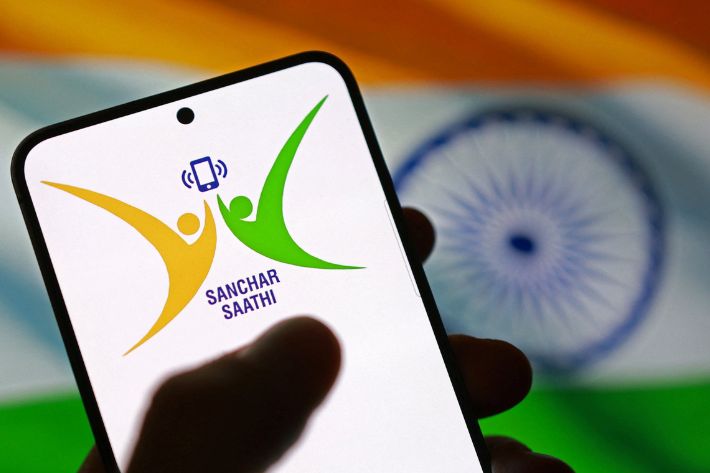
The Narendra Modi government had privately ordered phone makers and importers on November 28 to pre-install an app called Sanchar Saathi (Hindi for ‘Communication Partner’) within 90 days on all new devices and push its installation on older devices through software updates.
Copies of the order shared publicly on social media this week also showed the order asking companies to ensure that the app could not be disabled or removed.
Also on AF: Apple to Resist Indian Order to Preload State-Run App on Phones
The order led to widespread outcry from users, critics, activists and political opponents, who cited fears that the app could become a state surveillance tool in the world’s most populous nation.
On Wednesday, the Modi government responded to the backlash by rescinding its order.
“Government has decided not to make the pre-installation mandatory for mobile manufacturers,” India’s communications ministry said in a press statement.
The move to revoke the order was also driven by opposition from phone manufacturers.
Sources close to Apple told Reuters on Tuesday that the iPhone-maker was not going to comply with the order as it would “raise a host of privacy and security issues for the company’s iOS ecosystem”.
Samsung also had plans to not comply with the directive, Reuters reported, citing sources.
The government’s plan had become a hot issue on India’s mostly nationalistic prime-time news, with politicians and privacy advocates sparring over its pros and cons. Newspaper editorials also joined privacy advocates in denouncing the move.
Earlier on Wednesday, senior Congress leader Randeep Singh Surjewala said in a notice to the parliament that the government needed to clarify the legal authority for “mandating a non-removable app” and called for the house to debate privacy and security risks.
“The grave, serious and real apprehension is also that such [a] compulsorily installed app can have a backdoor, thereby absolutely compromising the data and privacy of the user,” he added.
‘Treat as cautious optimism’
Amid the outcry earlier this week, the government said the app only helps track and block stolen phones and prevents them from being misused.
In its press release announcing the order’s scrapping, the India telecom ministry repeated that claim. “The app is secure and purely meant to help citizens from bad actors in the cyber world,” the ministry readout said, adding that its intent was “to provide access to cyber security to all citizens”.
“There is no other function other than protecting the users in the app and they can remove the app whenever they want. This has been clarified by Government,” it said referring to a statement on Tuesday from the country’s telecom minister saying the app was a “voluntary and democratic system”.
Government removes mandatory pre-installation of Sanchar Saathi App
The Government with an intent to provide access to cyber security to all citizens had mandated pre-installation of Sanchar Saathi app on all smartphones. The app is secure and purely meant to help citizens from…
— PIB India (@PIB_India) December 3, 2025
But Modi’s plan had little precedent, according to industry sources. Russia may be the only other known example. Moscow in August ordered that a state-backed messenger application called MAX, a rival to WhatsApp that critics say could be used to track users, must be pre-installed on all mobile phones and tablets.
Modi has faced criticism over issues of privacy before. In 2020, his government came under fire for a COVID-19 contact-tracing app that was compulsory for use by office workers. That measure was later diluted to a request when privacy advocates protested.
On Wednesday, following the government statement, internet activists said they would remain cautious until a full legal order rescinding previous instructions follows.
“For now, we should treat this as cautious optimism, not closure, until the formal legal direction is published and independently confirmed,” India’s Internet Freedom Foundation said in a statement.
The group had, on Tuesday, vowed to fight the initial order “till it is rescinded.”
- Reuters, with additional editing and inputs from Vishakha Saxena
Also read:
Apple Looks To Boost China, India Investment Despite Trump Pressure
Apple Will Shift Production of US iPhones to India, FT Says
Apple’s India Boost as New Delhi Cuts Tech Import Duties
Apple Stock Soars as iPhones Airlifted From India ‘to Beat Tariffs’
Apple Bets on India’s Middle Class in Hunt for Future Markets
‘Fanboys’ Queue Up as Apple Opens First India Store in Mumbai
Apple Chief Tim Cook ‘Very Bullish’ on India – Nikkei
Cybersecurity lapses found at India’s National Payments Corp
India the World Leader in Internet Shutdowns in 2023 – Print