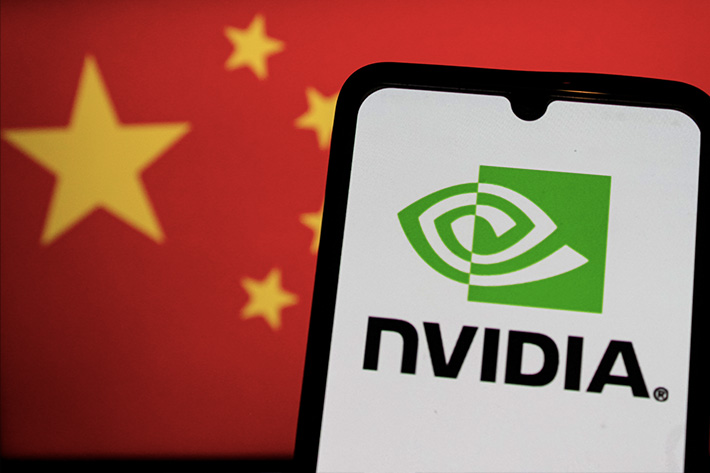
Nvidia is asking its Chinese customers to make full upfront payments for its H200 artificial intelligence chips as uncertainty persists around whether Beijing officials will permit those purchases to proceed, Reuters reported citing two people briefed on the matter.
The US chipmaker has imposed unusually stringent terms requiring full payment for orders with no options to cancel, ask for refunds or change configurations after placement, the people said.
In special circumstances, clients may provide commercial insurance or asset collateral as an alternative to cash payment, one of the people added.
Also on AF: China ‘Reviewing Meta’s Purchase of AI Startup Manus’
Nvidia’s standard terms for Chinese clients have previously included advance payment requirements, but they were sometimes allowed to place a deposit rather than make a full payment upfront, the person said. But for the H200, the company has been particularly strict in enforcing conditions given the lack of clarity on whether Chinese regulators would green-light the shipments, the person added.
Chinese officials have held meetings with the country’s top tech firms about their H200 requirements, hinting Beijing might loosen up an earlier ban it imposed on Nvidia purchases. But nearly a month since US approved sales of the chips to China — despite being Nvidia’s second-most powerful processors — Chinese regulators are yet to give a clear directive.
On Wednesday, tech portal The Information reported that Beijing had asked some Chinese tech companies this week to halt orders for the H200 chips. The directive was issued as Beijing is still considering whether, and under what conditions, should it allow access to Nvidia’s high-performance chips, the report said citing people familiar with the matter.
Beijing is aiming to discourage local technology companies from rushing to stockpile U.S. chips before a decision is reached, the report said.
The report further added that Beijing is expected to mandate domestic artificial intelligence chip purchases instead, a move that will be in line with China’s larger effort to establish a self-sufficient chip supply chain.
A separate report, meanwhile, said China plans to approve some H200 imports as soon as this quarter. Chinese officials are preparing to allow purchases for select commercial uses, while barring the military, sensitive government agencies, critical infrastructure and state-owned enterprises due to security concerns, it said.
Firing up the supply chain
The strict payment requirements underscore the delicate balancing act Nvidia faces as it attempts to capitalise on surging Chinese demand while navigating regulatory uncertainty with both Beijing and Washington.
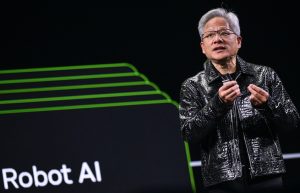
Nvidia CEO Jensen Huang said on Tuesday that customer demand for H200 chips was “quite high” and that the company has “fired up our supply chain” to ramp up production.
Huang said he did not expect China’s government to make a formal declaration on approval, but “if the purchase orders come, it’s because they’re able to place purchase orders.”
Chinese technology companies have placed orders for more than 2 million H200 chips that are priced at around $27,000 each, far exceeding Nvidia’s inventory of 700,000 of the chips.
While Chinese chipmakers like Huawei have developed AI processors including the Ascend 910C, their performance still lags behind Nvidia’s H200 for large-scale training of advanced AI models.
Chinese internet giants including ByteDance and others view the H200 as a significant upgrade over currently available chips. The H200, currently Nvidia’s second-most powerful chip, delivers roughly six times the performance of the now-blocked H20 chip that Nvidia had designed specifically for the Chinese market.
A risk transfer
Nvidia plans to fulfil initial orders for the H200 from its existing stock, with the first batch of H200 chips expected to arrive before the Lunar New Year holiday in mid-February.
The company has also approached contract chipmaker Taiwan Semiconductor Manufacturing Co about ramping up H200 production to meet the Chinese demand, with additional manufacturing expected to begin in the second quarter of 2026.
But Nvidia has been burned in the past. Last year, it wrote down $5.5 billion in inventory after the Trump administration abruptly banned it from selling the H20 chip to China, previously the most powerful product it was able to offer there.
While the US has reversed that decision, China has since banned H20 shipments.
The payment structure for the H200 effectively transfers financial risk from Nvidia to its customers, who must commit capital without certainty that Beijing will approve the chip imports or that they will be able to deploy the technology as planned.
- Reuters, with additional editing and inputs from Vishakha Saxena
Also read:
China Now Requires Chipmakers to Use At Least 50% Local Equipment
US Delays Fresh Chip Tariffs Against China to Keep The Peace
US Begins Reviewing Licences For Sale of H200 Chips to China
China’s Big Tech Secret: Lab Copied Dutch Chipmaking Machine
China Firms Lobby For Nvidia’s H200 But Local Chips Remain
ByteDance, Alibaba ‘Looking to Place Big Orders’ For Nvidia’s H200
Nvidia’s Biggest Chinese Buyer Can No Longer Use Its Chips For AI
Powerful Nvidia Chip May Put Chinese Chipmakers in Choppy Waters
US Delays Fresh Chip Tariffs Against China to Keep The Peace
China ‘Cutting Electricity Bills In Half’ For Its AI Chip Firms – FT
Chinese AI Firms, Chipmakers Form Alliance To Ditch Foreign Tech
China Steps up Checks on Nvidia AI Chips at Major Ports, FT Says
Subsidies And Homegrown Tech: How China Plans To Rival Stargate
Nvidia CEO Says US Export Curbs on AI Chips is ‘Flawed’ Policy
China’s Huawei ‘Hoping Its New AI Chip Can Outpower Nvidia’
China’s Huawei, SMIC ‘to Ramp Up Production’ of Newest AI Chip
Satellite Images Show Huawei’s Expanding Chip Facilities – FT
Nvidia’s Bid To Stop Huawei
China Science Vs US Export Controls
Beijing And Its AI Billions