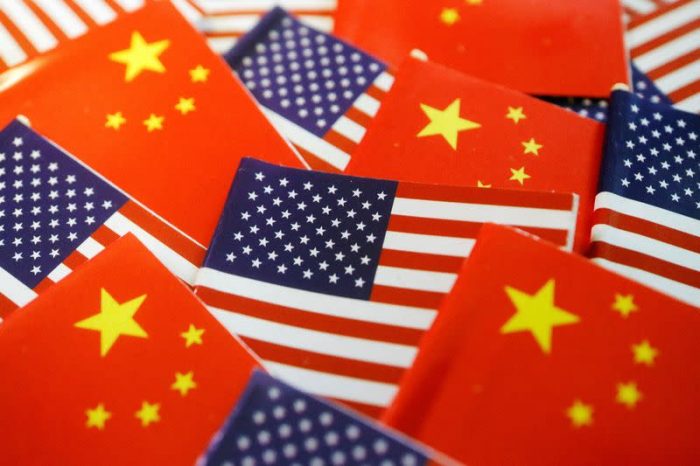
US President Donald Trump’s threat to put a 25% tariff on exports from any country that does business with Iran has the potential to destroy the trade truce that he signed with China.
Indeed, it could also seriously impact US trade with a handful of other countries, some of whom are regarded as friends or allies of the US, such as India, Turkey and the United Arab Emirates.
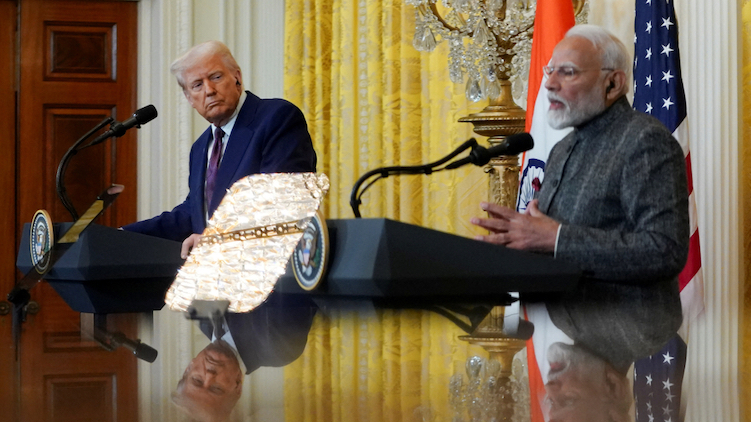
Trump put a post on Truth Social on Monday (US time) that said: “Effective immediately, any Country doing business with the Islamic Republic of Iran will pay a Tariff of 25% on any and all business being done with the United States of America. This Order is final and conclusive,” he said without giving any further detail.
ALSO SEE: Bets on Snap Election Push Japanese Stocks to Record High
And Trump was at it again on Tuesday, with another provocative post on social media (Truth Social) that said:
“Iranian Patriots, KEEP PROTESTING – TAKE OVER YOUR INSTITUTIONS!!! Save the names of the killers and abusers. They will pay a big price. I have cancelled all meetings with Iranian Officials until the senseless killing of protesters STOPS. HELP IS ON ITS WAY. MIGA!!! – PRESIDENT DONALD J. TRUMP”
Thousands killed
Meanwhile, several hours earlier, an Iranian official told Reuters that about 2,000 people, both protesters and security officials, had been killed in the uprising, although The Guardian noted that others say the toll could be three times that amount.
In regard to Trump’s tariff threat, the Chinese embassy in Washington criticized the US leader’s approach on Monday, saying China will take “all necessary measures” to safeguard its interests and opposed is “any illicit unilateral sanctions and long-arm jurisdiction.”
Foreign Ministry spokesperson Mao Ning also made a short comment at a press briefing in Beijing on Tuesday, which suggests China is being careful about how it responds to Trump’s latest outbursts.
“China’s position on the tariff issue is very clear: there are no winners in a tariff war, and China will firmly safeguard its own legitimate and lawful rights and interests.”
Iran flashpoint in Trump’s first term
Iran became a flashpoint in US-China ties during Trump’s 2017-21 first term as president as Washington tightened sanctions on Tehran and put China’s Huawei, accused of selling technology to the Islamic Republic, in its crosshairs.
The arrest of Meng Wenzhou, the daughter of Huawei’s founder, in Canada at Washington’s request sparked retaliation and a hostage crisis, with bitter recriminations that lingered for the remainder of Trump’s first administration.
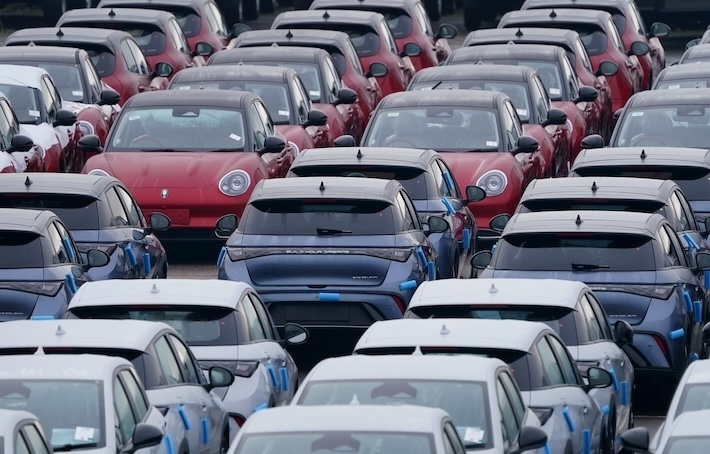
With Iran in his sights once again, the duty would see Chinese shipments to the US incurring levies exceeding 70%, higher than the effective 57.5% tariffs in place before Trump and Chinese President Xi Jinping struck a deal in October to de-escalate their trade war.
It is unclear which countries with Iranian business links Trump might target, but he has not named China. The US president has also made offhand remarks that threatened to upend foreign policy without acting on them before.
“China will call [Trump’s] bluff. I can assure you that Trump has no guts to impose the extra 25% tariffs on China, and if he does, China will retaliate and he will be punished,” Wu Xinbo, dean of the Institute of International Studies at Fudan University told Reuters, “just like in Meng Wenzhou’s case.”
China-Iran dealings decline
Other Chinese experts questioned why Trump seemed intent on revisiting one of the most contentious foreign policy issues from his first term, despite having already made Beijing think twice about providing economic support to Tehran.
“China and Iran are not as close as in the public imagination,” said a Beijing-based Chinese academic who advises the foreign ministry on Iran policy, and requested anonymity as they were not authorised to speak to media, Reuters reported on Tuesday.
China has sharply reduced Iranian imports in recent years, according to Chinese customs data, with Chinese companies wary of being sanctioned by the US government. China bought just $2.9 billion of Iranian goods in the first 11 months of last year, the latest customs figures show, compared with a peak of $21 billion in 2018 during Trump’s first presidency.
That said, Beijing moves around 80% of Iran’s shipped oil through small independent refiners trading off the books to skirt US sanctions over the country’s nuclear ambitions.
China’s state-backed oil majors have not done any business with Iran since 2022. Some analysts say the independents’ shipments means the total value of China’s purchases remains in the tens of billions of dollars.
“China is just an excuse, a kind of disguise for the Trump administration, to impose new pressure [on] Iran,” Wang Jin at the Beijing Club for International Dialogue think tank, said.
Still, Iran remains substantially bigger business for China than Venezuela, where Trump acted to curb Beijing’s stake with a commando raid to capture President Nicolas Maduro to face drug charges in the United States.
Analysts said Trump’s renewed push to cut off Iran from global trade flows is likely to deepen scrutiny of Xi’s flagship Belt and Road Initiative, where Iran is a strategic hub for the passage of Chinese goods to the Middle East.
It also raises uncertainty over whether Trump will visit Beijing in April as expected, with analysts anticipating the announcement of a sweeping trade agreement with Xi.
“Whether Trump’s tariffs are enforceable remains a question,” Xu Tianchen, a Beijing-based analyst at the Economist Intelligence Unit, said. “Last year, he announced tariffs related to ‘illicit’ Russian oil trade, but their implementation was patchy.”
“Trump is also the kind of person who likes bullying the weak,” Xu said. “He should manage his actions to avoid these tariffs escalating into direct confrontation with China.”
World awaits Trump’s next move
Meanwhile, all eyes will be on Washington to see what Trump does next, amid speculation that the US could intervene if the conservative regime in Tehran steps up its attacks on protesters.
Iran – which is a member of the OPEC oil producers’ group, has been heavily sanctioned by Washington for years – exports a lot of its oil to China, Turkey, Iraq, the UAE and India.
Reuters said there was no official documentation from the White House of the policy on its website, nor information on what legal authority Trump would use to impose the tariffs, or whether they would be aimed at all of Iran’s trading partners. And the White House did not respond to a request for comment.
“China’s position against the indiscriminate imposition of tariffs is consistent and clear. Tariff wars and trade wars have no winners, and coercion and pressure cannot solve problems,” a spokesperson of the Chinese embassy in Washington said on X.
Japan and South Korea, which agreed on trade deals with the US last year, said on Tuesday they are closely monitoring the development.
“We … plan to take any necessary measures once the specific actions of the US government become clear,” South Korea’s trade ministry said in a statement.
Japan’s Deputy Chief Cabinet Secretary Masanao Ozaki told reporters that Tokyo will “carefully examine the specific content of any measures as they become clear, as well as their potential impact on Japan, and will respond appropriately.”
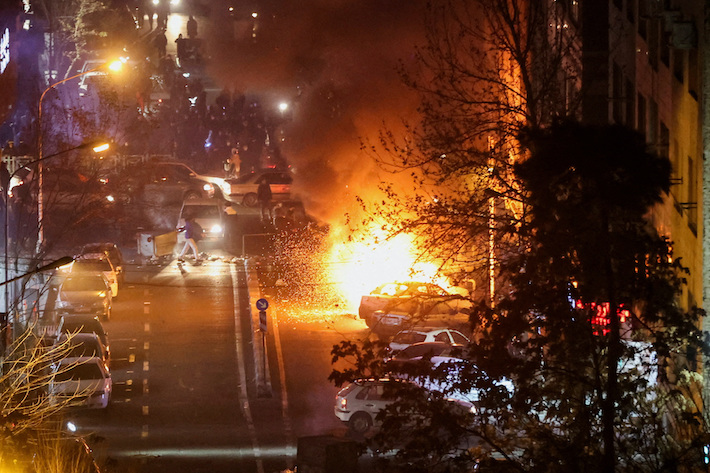
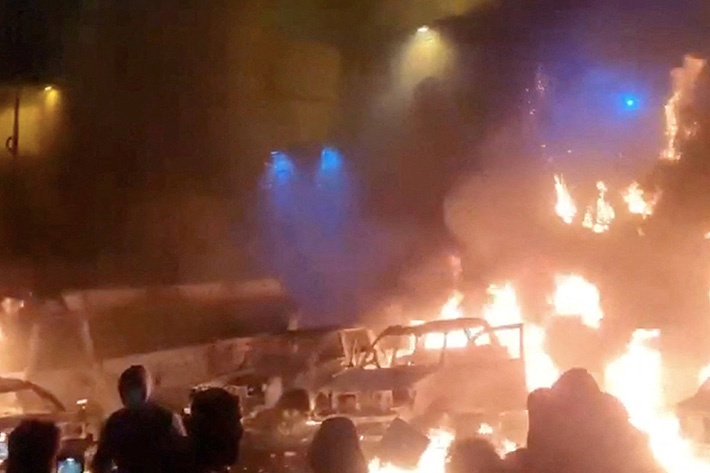
Iran, which had a 12-day war with US ally Israel last year and whose nuclear facilities the US military bombed in June, is seeing its biggest anti-government demonstrations in years.
Trump has said the US may meet Iranian officials and that he was in contact with Iran’s opposition, while piling pressure on its leaders, including threatening military action.
Iran’s warning on US ‘targets’
Tehran said on Monday it was keeping communication channels with Washington open as Trump considered how to respond to the situation in Iran, which has posed one of the gravest tests of clerical rule in the country since the Islamic Revolution in 1979.
Demonstrations evolved from complaints about dire economic hardships to defiant calls for the fall of the deeply entrenched clerical establishment.
During the course of his second term in office, Trump has often threatened and imposed tariffs on other countries over their ties with US adversaries and over trade policies that he has described as unfair to Washington.
But Trump’s trade policy is under legal pressure, as the US Supreme Court is considering striking down a broad swathe of Trump’s existing tariffs.
Iran exported products to 147 trading partners in 2022, according to World Bank’s most recent data.
Trump said on Sunday he said the US may meet Iranian officials.
Iran’s leaders, whose regional clout has been much reduced, are facing fierce demonstrations that evolved from complaints about dire economic hardships to defiant calls for the fall of the deeply entrenched clerical establishment.
Over 10,000 arrested
Iranians have been mounting increasing challenges as their theocratic rulers get older. Violent protests are reported to have erupted in 2009, 2019, 2021 and 2022. But now “the protests have since spiralled into a wholesale revolt” in the capital, at universities and multiple impoverished towns, with government forces “killing the protesters in droves,” the New York Times said in its Morning report today.
Videos transmitted despite the internet blackout and verified by the paper “show corpses lined up in body bags outside hospitals.”
Tehran has said it would consider US military facilities and Israel “legitimate targets” if it detects signs of an impending attack, Iran’s parliamentary speaker warned, according to a report by US news-site Politico on Sunday.
Speaker Mohammad Bagher Qalibaf said US military centres, bases and ships would be considered “legitimate targets” in the event of an attack on Iran, according to other media reports. “We do not consider ourselves limited to reacting after the action. We will act based on any objective signs of a threat.”
US-based rights group HRANA said by late Monday it had verified the deaths of 646 people, including 505 protesters, 113 military and security personnel and seven bystanders, and was investigating 579 more reported deaths.
Since the protests began on December 28, more than 10,700 people have been arrested, the group said.
HRANA said it received reports and videos on Monday from Tehran’s Behesht Zahra Cemetery where family members of victims “gathered at burial sites and chanted protest slogans.”
US citizens urged to leave
While airstrikes were one of many alternatives open to Trump, “diplomacy is always the first option for the president,” White House press secretary Karoline Leavitt told reporters on Monday.
“What you’re hearing publicly from the Iranian regime is quite different from the messages the administration is receiving privately, and I think the president has an interest in exploring those messages,” she said.
Iranian Foreign Minister Abbas Araqchi said Tehran was studying ideas proposed by Washington, but these were “incompatible” with US threats. “Communications between (US special envoy Steve) Witkoff and me continued before and after the protests and are still ongoing,” he told Al Jazeera.
The US Department of State Consular Affairs highlighted the escalating protests and said US citizens in Iran should consider leaving by land to Armenia or Turkey. “US nationals are at significant risk of questioning, arrest, and detention in Iran,” the department said on its TravelGov account on X.
Iran, which has not given an official death toll from the protests, blames the bloodshed on US interference and what it calls Israeli- and US-backed terrorists. State-run media has focused attention on the deaths of security forces.
The flow of information from the Islamic Republic has been hampered by an internet blackout since Thursday, although some Iranians still have access to the internet via Elon Musk’s Starlink satellite service, three people inside the country told Reuters.
Iran’s Ministry of Intelligence said on Monday it had detained “terrorist” teams responsible for acts including killing paramilitary volunteers loyal to the clerical establishment, torching mosques and attacking military sites, according to a statement carried by state media.
Addressing a large crowd in Tehran’s Enqelab Square on Monday, parliamentary speaker Qalibaf said Iranians were fighting a war on four fronts – “economic war, psychological warfare, military war against the US and Israel, and today a war against terrorism.”
Declaring the situation “under total control”, Araqchi said on Monday that 53 mosques and 180 ambulances had been set on fire since the protests erupted.
Despite the massive scale of the protests, there are no signs of splits in the Shi’ite clerical leadership, military or security forces, and demonstrators have no clear central leadership. The opposition is fragmented.
Trump said on Sunday that Iran had called to negotiate about its disputed nuclear programme. “A meeting is being set up, but we may have to act because of what is happening before the meeting,” he told reporters on Air Force One.
Trump was due to meet with senior advisers on Tuesday to discuss options for Iran, a US official told Reuters. The Wall Street Journal reported that those included military strikes, using secret cyber weapons, widening sanctions and providing online help to anti-government sources.
Striking military installations could be highly risky, as some may be located in heavily populated areas.
- Jim Pollard with Reuters
NOTE: The pic at the top of this report was changed and another added amid the text, while further updates and details (on Trump’s latest post, the Meng Wanzhou case, China-Iran trade and the death toll) were added on January 13, 2026.
ALSO SEE:
Unrest Widens in Iran: Internet Shut Amid Riots, Fires in Cities
Trump’s Venezuela Strike ‘May Embolden China’s Territorial Claims’
India ‘Could Face Higher Tariffs if Russian Oil Buying Continues’
‘Indonesian Oil’ Surging Into China May Come From Iran: Traders
India Wins Sanctions Waiver For Iran Port, US Keen For Deal
US Sanctions Force Indian, Chinese Refiners to Cut Russian Oil
Oil and Gas Firms, Governments Silent on Methane Leaks, UN Says
Oil Seen Topping $100 a Barrel if Iran Closes Strait of Hormuz
Judge Says China’s Huawei Must Face Trial on Iran Dealings
US Moves to Drop Charges Against Huawei CFO Meng Wanzhou
Huawei CFO Meng, Two Canadians Fly Home After US Prosecutors’ Deal