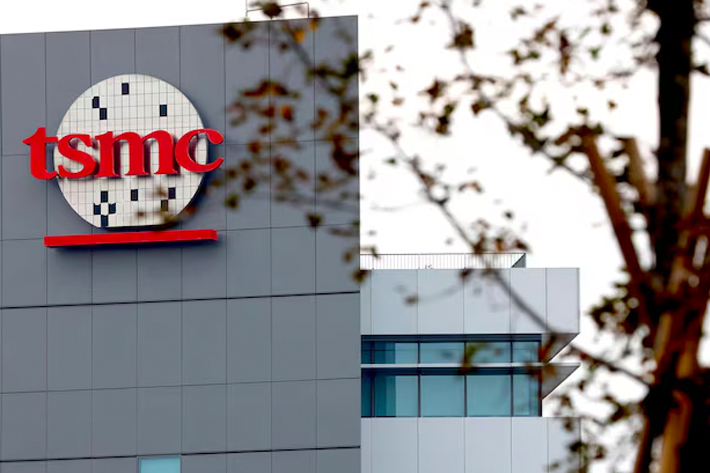
Taiwan says it hopes to become a close strategic partner with the United States on artificial intelligence after striking a deal to cut tariffs and boost its investment in the country.
US President Donald Trump has pushed the island — a majority producer of semiconductors — for greater investment, specifically in turning out chips that power AI.
“In this negotiation, we promoted two-way Taiwan–U.S. high-tech investment, hoping that in the future we can become close AI strategic partners,” Taiwanese Vice Premier Cheng Li-chiunz said in comments live streamed from a press conference in Washington.
Also on AF: Chinese Firms Told: ‘Stop Using US-Israeli Cybersecurity Software’
Cheng led the talks that clinched the trade deal on Thursday. It cuts tariffs on many of Taiwan’s exports, and directs new investments worth $250 billion in the US technology industry, especially to boost production of semiconductors, energy and artificial intelligence.
The figure includes $100 billion already committed by chipmaker TSMC in 2025, with more to come, US Commerce Secretary Howard Lutnick said on Thursday.
Taiwan will also guarantee an additional $250 billion in credit to facilitate further investment, the Trump administration said.
‘Win-win deal’
Cheng called the deal “win-win”, saying it would also encourage US investment in Taiwan. The United States is the island’s most important international backer and arms supplier, despite the lack of formal diplomatic ties.
The investment plan is company-led, rather than driven by the government, and Taiwan companies will continue to invest at home, Cheng added.
“We believe this supply-chain cooperation is not ‘move,’ but ‘build.’ We expand our footprint in the US and support the US in building local supply chains, but even more so, it is an extension and expansion of Taiwan’s technology industry.”
Investments would also cover AI servers and energy, Taiwan Economy Minister Kung Ming-hsin told reporters in Taipei, adding that it was up to companies to reveal the chip-related amounts.
TSMC in focus
In a statement, TSMC, the world’s main producer of advanced AI chips welcomed the prospect of “robust” trade pacts between the United States and Taiwan, adding that all its investment decisions were based on market conditions and customer demand.
“The market demand for our advanced technology is very strong,” it said. “We continue to invest in Taiwan and expand overseas.”
Once signed, the deal will need to be ratified by Taiwan’s parliament, where the opposition party has the most seats. Opposition leaders have expressed concern about the “hollowing out” of the crucial chip industry under a US trade deal.
Yesterday, we launched the largest semiconductor investment in American history, joined by Ingrid D. Larson of the American Institute in Taiwan and TECRO Representative Alexander Tah-Ray Yui as we advanced the historic America First trade and investment partnership led by… pic.twitter.com/asQPxWqBqZ
— Howard Lutnick (@howardlutnick) January 16, 2026
The objective was to bring 40% of Taiwan’s entire chip supply chain and production to the United States, Lutnick told CNBC in an interview on Thursday. If they were not built in the United States, the tariff was likely to be 100%.
Kung said he did not know how the figure of 40% had been calculated but Taiwan estimated that by 2036, the production split between Taiwan and the United States would be 80/20 for the advanced chips, classed as those of five nanometres and below.
“This round of deployment will strengthen the resilience of Taiwan–US and global semiconductor supply,” he said.
“A moderate level of global diversification is also necessary. Going forward, the biggest AI orders will come from the US market.”
Taiwan’s benchmark stock closed at a record high on Friday, boosted by TSMC’s strong fourth-quarter earnings and a favourable investor reaction to the tariff deal.
“Taiwan is the first country the US has publicly announced as receiving the most preferential treatment for chips and related products, highlighting that Washington views Taiwan as a key strategic partner in semiconductors,” Taiwan Institute of Economic Research President Chang Chien-yi told Reuters.
China worry
The deal, meanwhile, could also irritate China.
China regards democratically-ruled Taiwan as its own territory and strongly objects to high-level US-Taiwan exchanges. Taiwan rejects Beijing’s sovereignty claims.
But Washington has grown increasingly impatient with its reliance on computer chips from abroad, especially an island in China’s sights.
Semiconductors were invented in the US, many are designed there and it remains a top importer of them for everything from consumer gadgets to AI chatbots and advanced weaponry. But many of the most cutting-edge chips are manufactured abroad, especially in Taiwan. Intel and South Korea’s Samsung Electronics are also expanding US production capacity.
TSMC announced its Arizona factory in 2020, during US President Donald Trump’s first term, and expanded it under his Democratic successor Joe Biden.
As it expands further, TSMC risks overspending on a high-flying industry, running into labor and skill shortages, navigating tricky politics around foreign worker immigration and shifting business away from Taiwan at a time of immense geopolitical vulnerability for the island.
“Look, they need to keep our president happy, right,” US’ Lutnick told CNBC on Thursday, referring to Taiwan. “Because our president is the key to protecting their country.”
- Reuters, with additional editing by Vishakha Saxena
Also read:
Trump Says He’d be Very Unhappy if Xi Moves on Taiwan
Trump’s Venezuela Strike ‘May Embolden China’s Territorial Claims’
Taiwan on Alert as Some China Warships Remain After Huge Drill
US Delays Fresh Chip Tariffs Against China to Keep The Peace
TSMC, Korean Firms ‘Can Send Chipmaking Tools to China Plants’
Trump Says He’ll Hit China With Big Tariffs if it Takes Taiwan
Taiwan May Train US Workers in Chipmaking Under Tariff Deal
Taiwan Shoots Down US Push For 50-50 Chip Production Deal
TSMC’s $100bn US Deal: Taiwan Says It Won’t Share Top Chip Tech
TSMC to Cut Off All Chinese AI Clients From Its Advanced Chips
China War Risk Sees Taiwan’s TSMC Moving Fabs to US, Japan
Taiwan Invasion ‘Could Wipe Off up to $1 Trillion Per Year’