Chinese authorities have put tight restrictions on the country’s technology firms against purchasing Nvidia’s second-best artificial intelligence chips — the H200, people briefed on the matter told Reuters.
Officials summoned domestic technology companies to meetings on Tuesday, where they were explicitly instructed not to purchase the chips unless necessary, the sources said.
Authorities also told customs agents this week that Nvidia’s H200 artificial intelligence chips are not permitted to enter China, the people said.
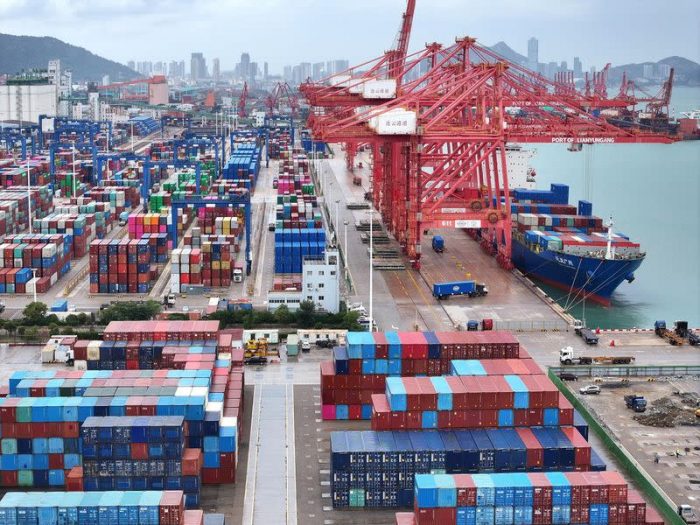
Also on AF: China’s Posts Record $1.2 Trillion Trade Surplus Despite US Tariffs
“The wording from the officials is so severe that it is basically a ban for now, though this might change in the future should things evolve,” one of the people said.
The sources said authorities had not provided any reasons for their directives and had not given any indication whether this constitutes a formal ban or a temporary measure.
Chinese technology companies have placed orders for more than two million H200 chips priced at around $27,000 each, far exceeding Nvidia’s inventory of 700,000 chips.
Despite that demand, however, it remains unclear whether Beijing wants to ban H200 chips outright so that domestic chip companies can flourish, or is still chewing over restrictions, or whether these measures could be used as a bargaining tactic in talks with Washington.
The Information reported on Tuesday that the Chinese government this week told some tech companies it would only approve their H200 purchases under special circumstances, such as for research and development conducted in partnerships at universities.
Exemptions are being discussed for R&D purposes and universities, one of the sources said.
‘Leverage’ ahead of Trump visit
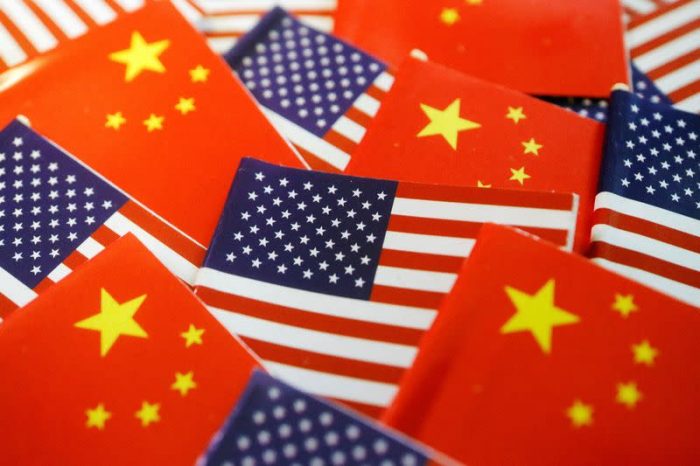
The H200 is one of the biggest flashpoints in current US-Sino relations.
The chip, formally approved by the Trump administration for export to China this week with some conditions, is also a hot-button issue in the US, with many China hawks concerned that the chips could supercharge the Chinese military and erode the US advantage in AI.
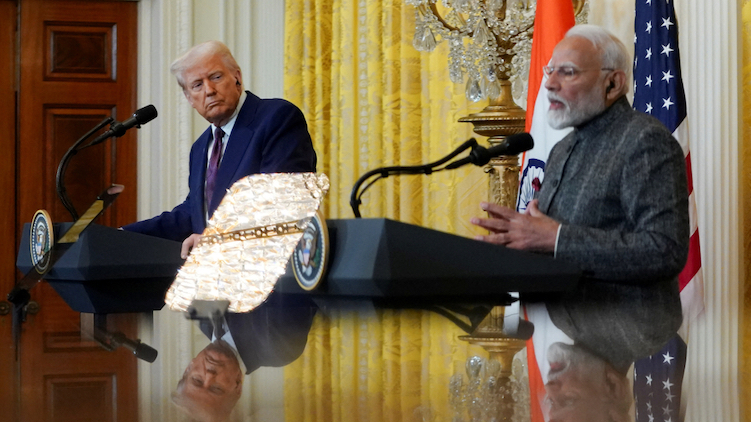
Analysts say Beijing’s restrictions on the H200 could be aimed at exerting leverage on Washington in the run-up to US President Donald Trump’s April visit to China to meet with Xi Jinping as both sides navigate an uneasy truce on trade.
“Beijing is… pushing to see what bigger concessions they can get to dismantle US-led tech controls,” Reva Goujon, a geopolitical strategist at research firm Rhodium Group, said.
Keen to stifle China’s AI and technological development, the US has placed restrictions on exports to China of high-end chips since 2022.
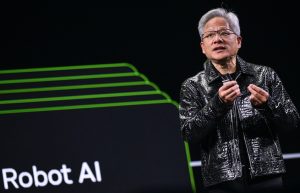
Last year, Trump banned and then allowed exports of a much weaker chip, the H20. But Beijing de facto blocked those sales from around August, prompting Nvidia CEO Jensen Huang to say the company’s share of the AI chip market in the world’s second-largest economy had shrunk to zero.
The H200, however, delivers roughly six times the performance of the H20, making it a highly attractive product.
Tech war trade-offs
While Chinese chipmakers have developed AI processors like Huawei’s Ascend 910C, the H200 is considered far more efficient for large-scale training of advanced AI models.
It remains debatable, however, which side has more to gain from the sales of H200 chips to China.
Re-entry into the Chinese market would mean huge profits for Nvidia and the US government, which will take a 25% fee on the chip sales.
White House AI czar David Sacks and others have also argued that exporting such chips to China discourages Chinese competitors from redoubling efforts to catch up with Nvidia’s most advanced chip designs.
“(Beijing) believes the US is desperate to sell AI chips to China, so it believes China has the leverage to extract concessions from the US in exchange for licence approvals,” Chris McGuire, senior fellow for China and emerging tech at the Council on Foreign Relations think tank, said.
- Reuters, with additional editing by Vishakha Saxena
Also read:
Trump’s ‘Tariff on States Trading With Iran’ Could Kill China Truce
Nvidia Asks Chinese Buyers to Pay Upfront For H200 Chips
China Now Requires Chipmakers to Use At Least 50% Local Equipment
US Delays Fresh Chip Tariffs Against China to Keep The Peace
China’s Big Tech Secret: Lab Copied Dutch Chipmaking Machine
China Firms Lobby For Nvidia’s H200 But Local Chips Remain Key
ByteDance, Alibaba ‘Looking to Place Big Orders’ For Nvidia’s H200
Nvidia’s Biggest Chinese Buyer Can No Longer Use Its Chips For AI
Powerful Nvidia Chip May Put Chinese Chipmakers in Choppy Waters
US Delays Fresh Chip Tariffs Against China to Keep The Peace
China ‘Cutting Electricity Bills In Half’ For Its AI Chip Firms – FT
Chinese AI Firms, Chipmakers Form Alliance To Ditch Foreign Tech
China Steps up Checks on Nvidia AI Chips at Major Ports, FT Says
Subsidies And Homegrown Tech: How China Plans To Rival Stargate
Nvidia CEO Says US Export Curbs on AI Chips is ‘Flawed’ Policy
China’s Huawei ‘Hoping Its New AI Chip Can Outpower Nvidia’
China’s Huawei, SMIC ‘to Ramp Up Production’ of Newest AI Chip
Satellite Images Show Huawei’s Expanding Chip Facilities – FT
Nvidia’s Bid To Stop Huawei
China Science Vs US Export Controls
Beijing And Its AI Billions