China’s artificial intelligence industry was bustling this week.
On Thursday, TikTok parent ByteDance released a new video-generating artificial intelligence model that instantly became a viral sensation in China.
Hashtags related to the model — Seedance 2.0 — racked up tens of millions of clicks on Weibo, China’s microblogging platform.
Also on AF: Researchers Say AI Doesn’t Make Work Easier, Just Intensifies It
Reuters reported that users shared videos generated by the AI model that showcased the complexity and image quality of its output, no matter how bizarre the prompt. The model also won praise for its ability to produce cinematic storylines with only a few prompts.
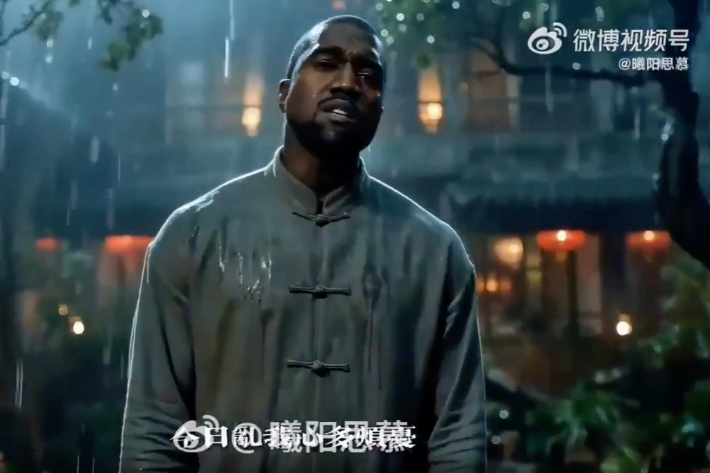
A 2-minute clip, said to be created by the model, showed rapper Ye (ex-Kanye West) and Kim Kardashian in an Imperial China palace drama — singing in Mandarin. It hit 1 million views.
Meanwhile… Kanye’s in top again, in China🤭
by
u/etherd0t in
TrendoraX
The buzz around Seedance 2.0 peaked when billionaire tech mogul Elon Musk replied to a post praising the model on his social media platform X, by commenting: “It’s happening fast.”
The craze for the model also prompted some to draw parallels with DeepSeek, China’s open-source ChatGPT rival, which shook global AI makers a year ago.
State-owned newspaper Beijing Daily, for instance, noted: “From DeepSeek to Seedance, China’s AI has succeeded.”
Another state-backed newspaper, the Global Times, wrote in an editorial that “the continued breakout success of Seedance 2.0 and similar innovations has gone even further” than last year’s success for DeepSeek, “giving rise to a wave of admiration for China within Silicon Valley.”
Flurry of launches ahead
Chinese media’s effort to paint Seedance as another ‘breakthrough’ is in line with Beijing’s lofty ambitions to position itself as a global leader in artificial intelligence.
While text-centric AI models such as OpenAI’s ChatGPT and DeepSeek’s R1 have become widely adopted and models specialising in generating videos and pictures represent the next frontier in the technology’s potential for disruption.
And ByteDance isn’t alone in vying for the AI market.
On Wednesday, Zhipu AI released its latest AI model, which it said features enhanced coding capabilities and the ability to perform long-running tasks without any user prompts.
Many other Chinese firms are also preparing to launch new models, some designed with more consumer appeal, and an aim to surpass the success of DeepSeek.
According to Reuters, several of these firms are launching new products around the Chinese New Year — the country’s longest and busiest holiday period, which officially begins on February 15.
One of them is Internet giant Alibaba, which is expected to unveil its Qwen 3.5 series during the holiday. The model features improved mathematical reasoning and coding capabilities, tech industry news site The Information reported last month.
The company also plans to spend a whopping $431 million during the holiday to promote its Qwen AI app.
DeepSeek, too, is preparing to release its next-generation model V4 featuring strong coding capabilities, in mid-February.
China’s open-source domination
In the past two years, DeepSeek’s models have repeatedly undercut competitors’ prices, pushing usage costs significantly below many US offerings.
In fact, a report by research group RAND on US-China AI competition published last month found that Chinese models operate at roughly one-sixth to one-fourth the cost of comparable US systems.
“DeepSeek showed the industry that you can create a very good model even when you’re resource-constrained,” Lian Jye Su, chief analyst at tech research firm Omdia, told Reuters.
“The combination of open-source access, strong reasoning capabilities and low deployment costs has become a defining model for how Chinese vendors now approach foundation models.”
Before DeepSeek’s breakout, some Chinese industry leaders, including Baidu CEO Robin Li, had argued that closed-source systems would dominate.
But within days of DeepSeek’s assistant overtaking ChatGPT in Apple’s App Store downloads in the US, Baidu and other leading firms began opening portions of their own models.
As of today, open-source AI repository Hugging Face is dominated by releases from Chinese tech giants such as Baidu, ByteDance and Tencent, and startups such as Moonshot. Nine of the top ten models listed on the repository are all Chinese [as of Feb 13, 1300 GMT].
According to a report by The Washington Post last year, open-source models from Chinese firms are now also more popular and powerful than their American counterparts.
“Chinese companies are actively embracing open source, significantly lowering the barriers for global developers and enterprises to access cutting-edge AI technology,” the Global Times wrote in an editorial on Wednesday praising Seedance 2.0.
‘High expectations’
Many Chinese AI giants are also moving away from the goal of advancing core model performance and shifting emphasis on integrating AI into consumer services. Alibaba’s Qwen chatbot has recently experimented with enabling users to purchase goods directly through conversational prompts.
The pivot reflects commercial realities. Companies such as Alibaba face shareholder pressure to monetise AI investments through consumer and enterprise applications while continuing to fund expensive infrastructure expansion.
And experts say, the market also wants to see what Chinese companies come up with beyond initial successes like that of DeepSeek.
“The surprise would be if some of these new models end up being underwhelming. I think there are high expectations here,” Alfredo Montufar-Helu, a managing director at Ankura Consulting in Beijing, told Reuters.
Focus on self-sufficiency, innovation
It is also worth noting that AI models are not China’s sole focus. Besides adopting DeepSeek’s open-source approach, competitors have also stepped up recruitment of top AI researchers. China is already home to more than half of the world’s AI researchers and leads globally in publishing AI research.
Meanwhile, early this week, Reuters reported that China’s ByteDance was also looking develop its own AI semiconductors with South Korean chipmaking giant Samsung.
ByteDance aims to receive sample chips by the end of March this year, the report said, citing people familiar with the matter. The company plans to produce at least 100,000 units of the chip, designed for AI inference tasks, this year. And ByteDance is looking to progressively ramp production to up to 350,000 units, it said.
Though a spokesperson for the company said the report was inaccurate, it would mark a milestone for ByteDance, if successful. The company has sought to develop chips to support its AI workloads since as far back as 2022.
Meanwhile, ByteDance’s rivals Alibaba and Baidu have marched ahead in AI chip development. Alibaba last month unveiled its Zhenwu chip for large-scale AI workloads. Baidu sells chips to external clients and plans to list its chip unit Kunlunxin soon.
Those efforts tie in with Beijing’s larger goal of creating a self-sufficient supply chain for key technologies like semiconductors and AI, especially as Beijing faces strict US export controls restricting its access to tech like advanced semiconductors.
During the week, Chinese President Xi Jinping and Premier Li Qiang both stressed that goal again.
While Li recommended better use of resources like computing power and AI talent, Xi called for a concentrated push “to secure breakthroughs” in science and technology, according to state media Xinhua.
“Self-reliance and strength in science and technology” would be “key to building China into a great modern socialist country”, he said.
- Vishakha Saxena
Also read:
China Now Requires Chipmakers to Use At Least 50% Local Equipment
Chinese Firms Fare Worst As Study Finds AI Majors Fail Safety Test
DeepSeek Researcher Pessimistic About AI’s Impact on Humanity
China Firms Lobby For Nvidia’s H200 But Local Chips Remain Key
Nvidia’s Biggest Chinese Buyer Can No Longer Use Its Chips For AI
China’s Big Tech Secret: Lab Copied Dutch Chipmaking Machine
Chinese AI Firms, Chipmakers Form Alliance To Ditch Foreign Tech
Powerful Nvidia Chip May Put Chinese Chipmakers in Choppy Waters
China ‘Cutting Electricity Bills In Half’ For Its AI Chip Firms – FT
ByteDance, Alibaba Get Beijing Nod to Buy Nvidia’s H200 Chips
US Delays Fresh Chip Tariffs Against China to Keep The Peace
Nvidia CEO Says US Export Curbs on AI Chips is ‘Flawed’ Policy
China’s Huawei ‘Hoping Its New AI Chip Can Outpower Nvidia’
China’s Huawei, SMIC ‘to Ramp Up Production’ of Newest AI Chip
Satellite Images Show Huawei’s Expanding Chip Facilities – FT
The Idea of AI Super-Intelligence is a ‘Fantasy’ – US Researcher
AI is ‘Effectively Useless,’ Veteran Analyst Warns
‘Big Short’ Wagers $1-Billion Bet That ‘AI Bubble’ Will Burst
Is The AI Frenzy a Hallucinatory Bubble?
Nvidia’s Bid To Stop Huawei
China Science Vs US Export Controls
Beijing And Its AI Billions