A global body focused on biodiversity and ecosystems says the growth of the world economy has caused immense biodiversity loss and “now poses a critical and pervasive systemic risk” to financial stability and human well-being.
A new report published on Monday (Feb 9) by the Intergovernmental Platform on Biodiversity and Ecosystem Services (IPBES) says that “businesses can either lead transformative change, or risk extinction.”
All businesses depend upon and impact nature, and all businesses can be positive agents of change, the IPBES says, and its new report highlights dozens of ways businesses can do that.
ALSO SEE: Nikkei at New Record High as Asian Markets See More Gains
Officials from more than 150 governments attended the intergovernmental body’s 12th plenary session in Manchester last week to learn about the report, which found that businesses are central to halting and reversing biodiversity loss.
But organisers said “many often lack information to address their impacts and dependencies, as well as the risks and opportunities relating to biodiversity and nature’s contributions to people.”
The IPBES report was prepared over three years by 79 leading experts from 35 countries and all regions of the world, drawn from science and the private sector.
Every business depends on biodiversity and every business impacts biodiversity, these top scientists say.
“Even companies that might seem far-removed from nature or that do not see themselves as nature-based rely, directly or indirectly, on material inputs, regulation of environmental conditions – such as flood mitigation and water supply – and non-material contributions such as tourism, recreation, education, and spiritual, aesthetic and cultural values.
“But businesses often bear little or no financial cost for their negative impacts and many cannot currently generate revenue from positive impacts on biodiversity.”

Businesses perpetuating systemic risks
The assessment report found that the current conditions in which businesses operate are not always compatible with achieving a just and sustainable future, and that these conditions also perpetuate systemic risks.
“Businesses often face inadequate or perverse incentives, barriers that hinder efforts to reverse nature’s decline, an institutional environment with insufficient support, enforcement and compliance, as well as significant gaps in data and knowledge.
“These combine with business models that result in ever-increasing material consumption and an emphasis on reporting quarterly earnings, to contribute to the degradation of nature around the world.”
The report says fundamental change is possible and necessary to create an enabling environment to align what is profitable for business with what is beneficial for biodiversity and people.
It shows both the risks of nature loss to business, and the opportunities for business to help reverse this.
Matt Jones, a British UNEP ‘impact officer’ who was one of three co-chairs of the assessment, said the report will give businesses and financial institutions, plus governments and civil society, a guide on how to take meaningful steps towards transformative change.
“Businesses and other key actors can either lead the way towards a more sustainable global economy or ultimately risk extinction… both of species in nature, but potentially also their own,” he said.
‘Business incentives driving nature’s decline’
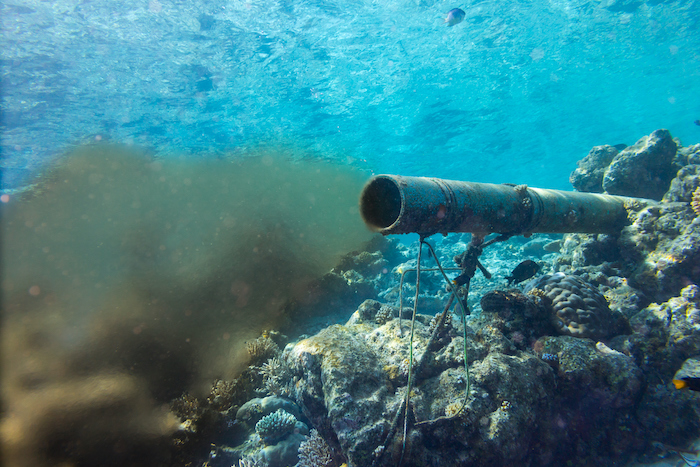
Current business practices need to be addressed to allow transformative change to halt and reverse biodiversity loss, Jones and his colleagues say. For example, large subsidies that drive losses of biodiversity are directed to business activities with the support of lobbying by businesses and trade associations.
In 2023, global public and private finance flows with directly negative impacts on nature were estimated at $7.3 trillion, including $4.9 trillion of private finance, with public spending on environmentally harmful subsidies of about $2.4 trillion.
In contrast, just $220 billion in public and private finance flows were directed in 2023 to activities that contribute to the conservation and restoration of biodiversity, representing just 3% of the public funds and incentives that encourage harmful business behaviour, or prevent behaviour beneficial to biodiversity, the IPBES says.
“The loss of biodiversity is among the most serious threats to business”, Stephen Polasky, an American professor who was another co-chair of the Assessment.
“Yet the twisted reality is that it often seems more profitable to businesses to degrade biodiversity than to protect it. Business as usual may once have seemed profitable in the short term, but impacts across multiple businesses can have cumulative effects, aggregating to global impacts, which can cross ecological tipping points.”
The report says that policies, plus financial and cultural shifts, that are good for nature, are also moves that are best for profitability. “The report offers tools for choosing more effective measurements and analysis,” Polasky said.
Perhaps the most positive news about the IPBES’s latest report is that China, India and the European Union all endorsed the body’s findings, along with representatives from more than 100 other countries.
- Jim Pollard
ALSO SEE:
Chinese Solar Panel Makers Get a Rise After Musk Team Visits
China to Spend $574 Billion on Power Grids Amid Renewables Push
China, India See First Drop in Coal Power Use in Half a Century
Asia’s Billion-Dollar Carbon Boom?
China’s One Trillion Watt Solar Journey
Surge in Solar Power, Data Centres Spurs Battery Boom in China
Renewables Top Coal Power for First Time in First Half of 2025
Solar Power Boom Surging in Indonesia, Australia, Africa
China Lays Down Law to Solar Panel Makers: End Overproduction
China’s Desert Greening Projects Altering its Water Table: Study
Asia-Pacific ‘Faces $500bn Yearly Floods Hit if Warming Continues’