Indian refiners are reportedly sidestepping Russian oil purchases as New Delhi pushes to seal a long delayed tariff deal with Washington despite some growing protests about the agreement.
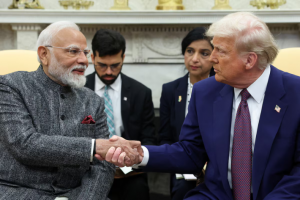
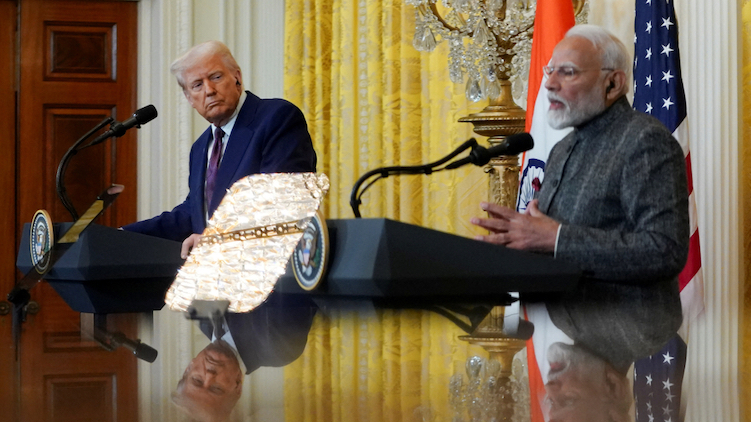
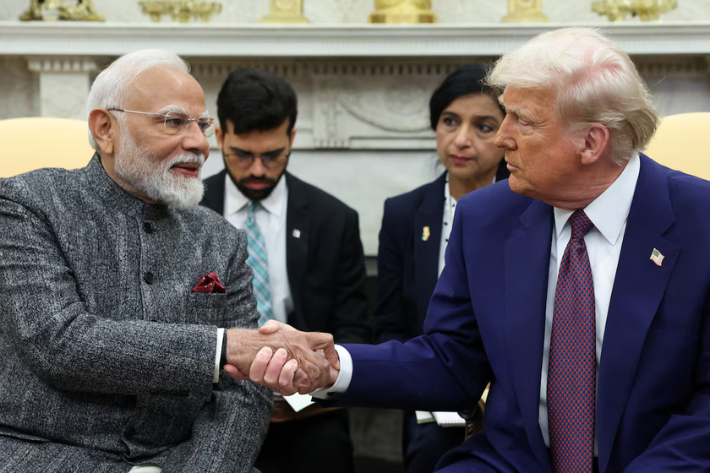
India and the US moved closer to a trade pact on Friday, announcing a framework for a deal they hope to conclude by March that would lower tariffs and deepen economic cooperation.
The framework reaffirmed a commitment to negotiations toward a broader bilateral trade agreement, the two governments said in a joint statement, while noting that further negotiations were needed to complete the pact.
Also on AF: Anutin’s BJT Wins a Nationalist Election Victory in Thailand
Separately, US President Donald Trump in an executive order on Friday removed the additional 25% tariff imposed on Indian goods for Russian oil purchases as New Delhi “committed to stop directly or indirectly importing” Russian oil.
Officials said, however, that they would monitor and recommend reinstating the tariff if India resumes oil procurement from Russia.
Amid those developments, India’s three biggest oil refiners Indian Oil, Bharat Petroleum and Reliance Industries are not accepting offers from traders for Russian oil loading in March and April, a trader who approached the refiners told Reuters.
These refiners, however, had already scheduled some deliveries of Russian oil in March, refining sources said. Most other refiners have stopped buying Russian crude.
Indian refiners may change their plan and place orders for Russian oil only if advised by the government, sources said.
Ensuring energy security
Meanwhile, despite pressure from Washington, New Delhi has not announced plans to halt Russian oil imports.
India became the top buyer of discounted Russian seaborne crude after Russia invaded Ukraine in 2022, spurring a backlash from Western nations that had targeted Russia’s energy sector with sanctions aimed at curtailing Moscow’s revenue and making it harder to fund the war.
One regular Indian buyer is Russia-backed private refiner Nayara, which relies solely on Russian oil for its 400,000-barrel-per-day refinery. Sources said Nayara may be allowed to keep buying Russian oil because other crude sellers pulled back after the European Union sanctioned the refiner in July.
That would be fit with New Delhi’s larger policy of determining its oil sources in line with the energy needs of the world’s most populous country, as Indian officials have repeatedly maintained.
Indian Foreign Secretary Vikram Misri also reiterated that stance on Monday. India plans to maintain multiple sources of energy supply and diversify them when needed as New Delhi looks to ensure consumers receive “adequate energy at the right price through reliable and secure supplies,” Misri said.
Still, sources said last month that India was preparing to cut Russian oil imports below 1 million bpd by March, with volumes eventually falling to 500,000–600,000 bpd, compared with an average 1.7 million bpd last year. India’s Russian oil imports topped 2 million bpd in mid-2025.
The intake of Russian oil by India, the world’s third-biggest oil consumer and importer, declined to its lowest level in two years in December, data from trade and industry sources show.
Indian refiners have been buying more oil from Middle Eastern, African and South American countries as they scale back on Russian oil purchases.
Brewing protests
Meanwhile, even as New Delhi is pushing to seal the deal with the US — which cuts India’s tariff from 50% down to 18% — protests are quickly growing against its decision to open up India’s agriculture sector.
Indian farm unions and opposition parties have called for nationwide protests against the new India-US trade framework, saying it risks hurting the farm sector by allowing more US imports, although the government says key staples are protected.
Despite initially pushing back firmly against Washington’s demand that India broadly open its agricultural market, New Delhi has agreed to lower trade barriers on some farm goods.
India is expected to allow imports of protein-rich distillers dried grains with solubles (DDGS), a byproduct of ethanol made from corn and other grains, from the United States, adding to a surplus in the domestic market.
Higher supplies of DDGS could benefit India’s nearly $30 billion poultry sector, where feed costs account for around 60-70% of total production expenses, by helping reduce expensive feed purchases.
Domestic oilseed processors and soybean farmers, however, may lose out if US imports rise. Prospects of duty-free imports of soy oil, cotton and apples from the US have also raised some concerns in India.
‘Indian farmers at a disadvantage’
The agreement has become a political flashpoint, reviving memories of the 2020–21 farm law protests, when the government was forced to repeal three laws aimed at deregulating agricultural markets.
The government has defended the pact, saying farmers’ interests are protected by excluding imports of grains such as rice, wheat, corn and dairy products, while growers of basmati rice, fruits, spices, coffee and tea would gain duty-free access to the US market.
Farm groups say the pact puts Indian farmers at a disadvantage.
“We are worried about the India-US trade deal, as it would hurt Indian farmers, who are far more vulnerable than their American counterparts,” Rakesh Tikait, a farmers’ leader, said.
The federal government’s Opposition also voiced concern about the deal on Monday.
“India could be made into a dumping ground by this deal,” Congress leader Pawan Khera said, citing US Agriculture Secretary Brooke Rollins, who said it would boost US farm exports to India, lift prices and pump cash into rural America.
- Reuters, with additional editing and inputs from Vishahka Saxena
Also read:
‘Software-Mageddon’ Wipes $23 Billion Off Indian IT Shares
Anthropic’s New Tools Show AI Risk to Indian IT Services Revenues
India Stocks, Rupee Soar on US Trade Deal Despite Few Details
India’s 20-Year Tax Break For Data Centres Faces Resource Crunch
Canada’s Carney Leads Trade Shift From US, to China, India, Australia
Giant EU-India Trade Deal Finalised, Modi Says
India ‘to Cut Tariffs’ on EU Cars in ‘Mother of All Trade Deals’
India ‘Could Face Higher Tariffs if Russian Oil Buying Continues’
How India’s Negotiations With The US on Trade Deal Broke Down
India’s US Exports Jump 22% in 2025
US Sanctions Force Indian, Chinese Refiners to Cut Russian Oil
India’s Adani Bans Sanctioned Tankers From Berthing at its Ports
How US Visa Hikes Can Benefit India
How Trump Lost The Plot, On India