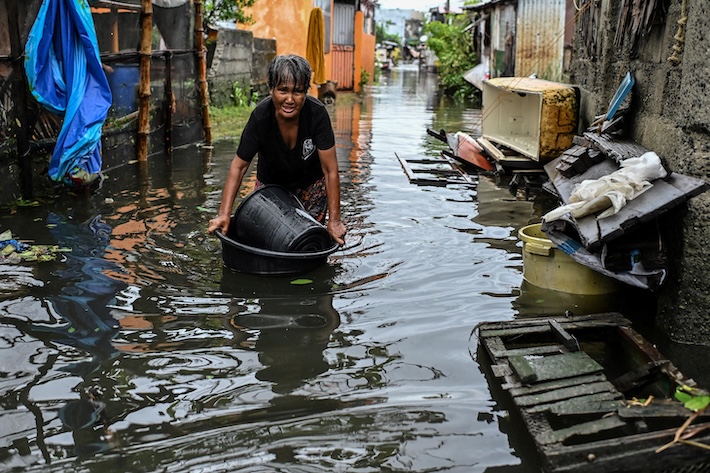
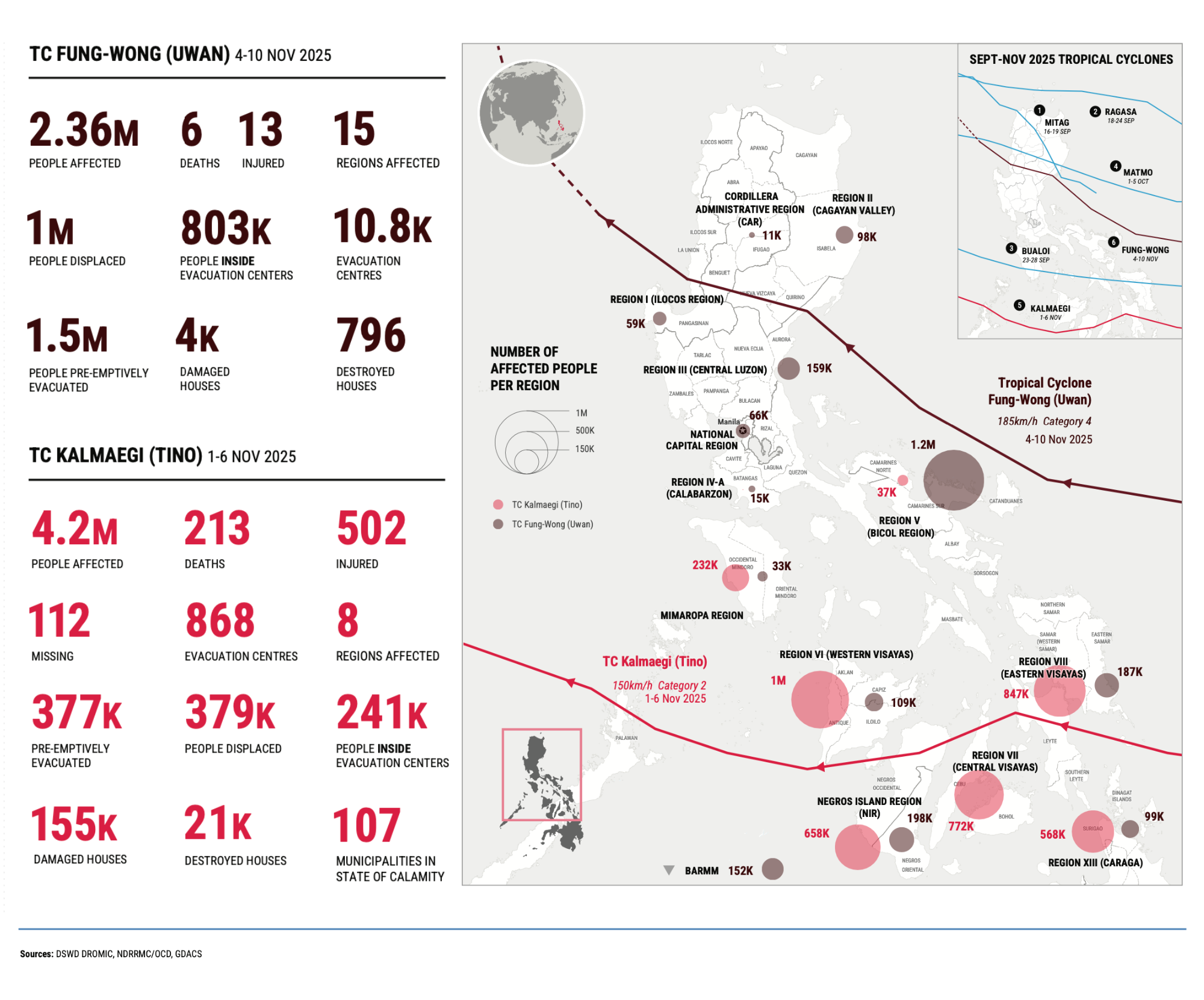
Just days after the Philippines battled Typhoon Kalmaegi — a storm that killed 224 people and destroyed homes and livelihoods of thousands of others — the country braced for yet another super storm on Sunday.
And as it made landfall, Super Typhoon Fung-Wong displaced another 1.2 million people on the Southeast Asian archipelago.
As of Tuesday, the typhoon was on course to hit Taiwan, which evacuated more than 3,000 people as it prepared for large volumes of rain on its mountainous east coast.
Also on AF: India’s Big Plans To Decarbonise Industries Struggle To Take Off
While Asia witnesses a tumultuous typhoon season, delegates from more than 190 countries are converging halfway across the world, in Brazil, for the COP30 climate summit.
And at the top of their agenda, rightfully so, is the problem of climate adaptation — that is, preparing for the actual and increasingly severe expected impacts of climate change.
The topic of “adaptation” has grown more important as countries fail to rein in climate-warming emissions enough to prevent extreme warming linked to increasingly frequent weather disasters across the planet.
“Without adaptation, climate change becomes a multiplier of poverty, destroying livelihoods, displacing workers, and deepening hunger. As the impacts intensify, inaction is no longer a technical failure but a political choice about who lives and who dies,” COP30 President-Designate André Corrêa do Lago said last month.
But where the money for adaptation will come from remains unclear.
Developing countries alone would need up to $310 billion every year by 2035 to prepare for worsening weather and other climate extremes, according to a UN report last month.
Ten of the world’s development banks, under pressure to free more cash for climate action, said on Monday they would continue to support the need.
“Lives, well-being and jobs cannot be sustained where homes, schools, farms and businesses are under threat from flooding, drought, or other climate extremes,” the banks said in a statement. Last year, they channeled more than $26 billion to low- and middle-income economies for adaptation.
Increasing costs
Kalmaegi and Fung-Wong are only two of the many typhoons that have hit Southeast Asia this year. The Philippines alone has been hit by 21 storms so far.
In the past two months, Southeast Asian nations, including the Philippines, Vietnam, Thailand, southern China, Laos, and Cambodia, have faced four major typhoons: Ragasa, Bualoi, Matmo, and Kalmaegi.
And scientists warn that such extreme events can only become more frequent as global temperatures rise.
For countries most at risk of facing these climate extremes, especially in Asia, costs are already piling up. Vietnam estimated the initial costs from Typhoon Kalmaegi at nearly $300 million, a month after Typhoon Bualoi caused $436 million in property damage. The Philippines is still tallying the costs of Kalmaegi and the deadly Super Typhoon Fung-wong that hit this week.
Asia is not the only region suffering. Jamaica, for instance, which took a devastating hit from Hurricane Melissa last month, is looking at up to $7 billion in damages, or about a third of its GDP, according to preliminary government estimates.
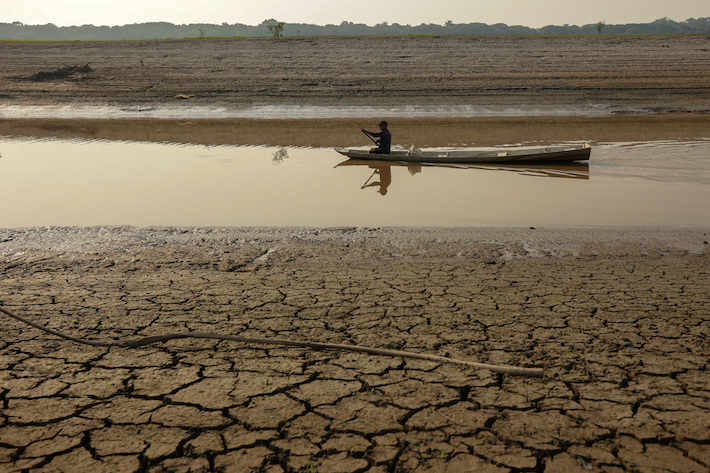
Beyond storms, there is also damage from flooding, extreme heat, drought and wildfires. Asian economic powerhouses like India and China face an outsized risk of both heatwaves and flooding. Both countries have previously said they require trillions in climate finance.
Still, finding funds for adaptation finance, especially from private entities, has been historically tough. Private finance currently makes up just 3% of adaptation funding, according to a report by multi-stakeholder Zurich Climate Resilience Alliance in September.
Key to that is resiliency projects are less likely to deliver a high return on investment than renewable energy projects that would help bring down greenhouse gas emissions.
Funding communities, plugging gaps
“With limited financial returns for the private sector, adaptation finance will rest on bold actions by the public sector,” the World Economic Forum said this week.
The organisation said adaptation finance was just as crucial as cutting down emissions.
Describing the need for adaptation finance, David Nicholson, chief climate officer at ZCRA member Mercy Corps, told Reuters: “We need resources that flow directly to local partners and communities who are already leading the response — rebuilding homes, restoring livelihoods, and protecting health systems from climate shocks.”
Public funding remains crucial to build that funding.
The director of a multi-partner UN fund told Reuters this week it would soon announce a new impact bond aimed at raising $200 million by the end of 2026.
“The whole bond idea started exactly one year ago at the previous COP in Baku,” said Markus Repnik, who leads the Systematic Observations Financing Facility, backed by the World Meteorological Organization, UN Development Programme and UN Environment Fund. “We were getting the sense that things are going to change significantly from an international perspective.”
The fund, which also works to plug gaps in weather data for developing countries, hopes for country donations this week during COP30.
More adaptation efforts are also to be announced at COP30, from funding air-conditioners and fans for people suffering extreme heat to AI mapping of soil conditions to improve crop yields.
On Monday, Germany and Spain pledged $100 million to a different effort, the multilateral Climate Investment Funds (CIF), which is financing projects to boost climate resilience in developing countries.
The organisation’s chief praised Brazil for featuring the issue as a COP30 focus, after years of seeing the issue slide down UN climate summit agendas.
“We’re really thrilled that, for the first time, adaptation is Day 1 and Day 2 of the COP,” CIF chief executive Tariye Gbadegesin told Reuters.
- Reuters, with additional editing and inputs from Vishakha Saxena
Also read:
Asia’s Billion-Dollar Carbon Boom?
Typhoon Ragasa Lashes Southern China After Killing 17 in Taiwan
Oil and Gas Firms, Governments Silent on Methane Leaks, UN Says
India Plans Countrywide Climate Insurance Amid $180bn Losses
Firms Underestimating Risks From Carbon-Fuelled Climate Change
Extreme Sudden Rainfall Kills Hundreds in Pakistan and India
Global Disaster Losses Soar to $80 Billion in First Half: Swiss Re
At Least 30 Dead After Huge Downpour in Beijing’s ‘Rain Trap’
Study Says Biochar Can Solve Asia’s Fertiliser Shortages