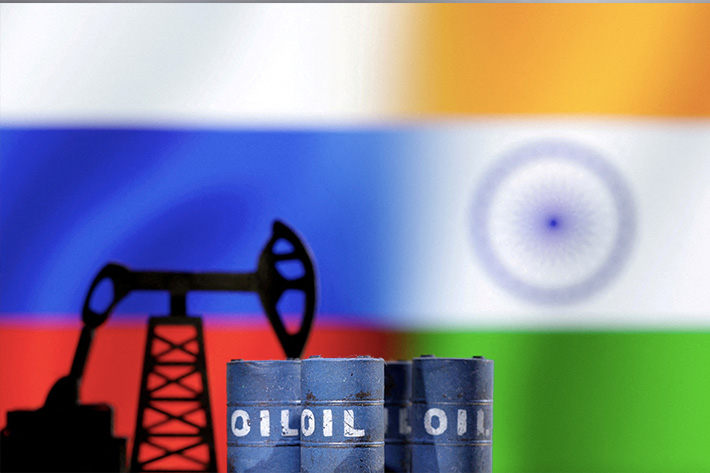
India slashed its imports of Russian oil in January to the smallest share in its overall mix since late 2022 amid US tariff deal pressure, Reuters has reported citing data from industry sources.
Supplies from the Middle East took their place, rising to the highest share in the mix over the same period.
New Delhi stepped up its purchases of Russian oil following Western sanctions on Moscow over its invasion of Ukraine. It has since maintained that it purchased discounted Russian crude in favour of its energy security.
Also on AF: AI Regulation ‘Urgently’ Needed, Altman Admits at India Summit
But New Delhi has been under tremendous pressure from the West for months to cut back purchases. Since August last year, Indian exports to the US were also subject to an extra 25% tariff as ‘penalty’ for New Delhi’s Russian crude purchases.
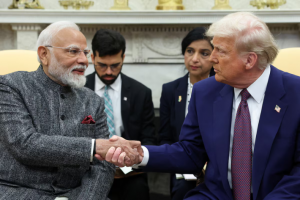
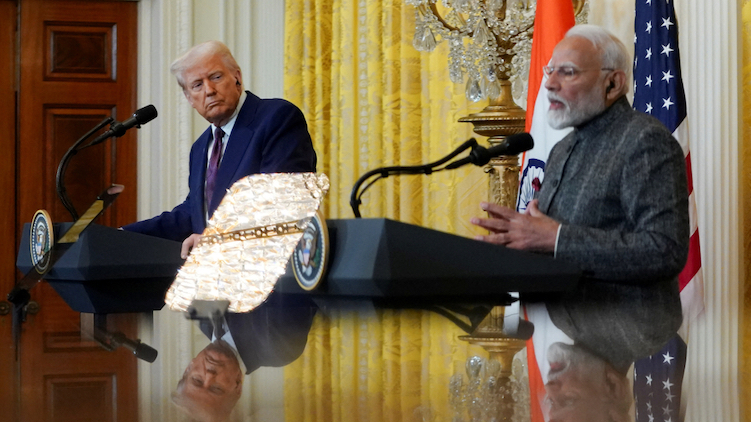
Early this month US President Donald Trump announced a surprise interim tariff deal with India, which included a removal of that penalty. Trump said India would no longer purchase Russian oil as part of that agreement.
While India responded that its energy decisions are based solely on securing cost-effective supplies, Moscow’s share in overall oil imports declined to 21% in January, down to about 1.1 million barrels per day of Russian crude for the month.
That was the lowest amount of Russian oil imports by India since November 2022, effectively slashing Moscow’s share to the smallest proportion since October 2022, Reuters said. After the Ukrainian invasion started, India’s Russian oil volumes went as high as 2 million barrels per day in some months.
China now top buyer of Russian seaborne crude
Meanwhile, China has replaced India as Russia’s top buyer of seaborne crude since November.
Import levels are likely to fall further to an average of 1 million to 1.2 million bpd in February and around 800,000 bpd in March, Sumit Ritola, lead research analyst, refining and modelling at Kpler, told Reuters.
“February numbers may appear slightly lower due to timing, as some end-of-month cargoes discharge in the following month,” he said, adding that Kpler expects Russian flows to India to gradually decline in the medium term rather than stop completely.
Trump has also said that his administration will keep a close watch on India’s oil imports and re-impose the 25% penalty if it makes a return to Russian oil. Last week, Reuters reported India’s three biggest refiners had been turning down offers from traders for Russian oil for the months of March and April.
Middle East back at top
Meanwhile, to make up for the lower Russian oil volumes, Indian refiners tapped alternative grades from the Middle East, South American countries and Western nations.
Middle Eastern oil accounted for about 55% of India’s overall imports in January, while the share of Latin American grades rose to a 12-month high of about 10%.
“February month-to-date data already shows Saudi Arabia regaining its position as India’s top supplier, with imports tracking at a new all-time high,” Ritola told Reuters.
Lower purchases of Russian oil raised the share of OPEC oil in India’s crude imports to an 11-month high in January, the data showed.
Venezuela in the mix
Some Indian refiners are also buying oil from Venezuela. Trump had, in his tariff deal announcement, said he wants India to boost energy purchases from the US and Venezuela.
India’s state-run Bharat Petroleum — its second-biggest refiner — made its first-ever purchase of Venezuelan oil for delivery in April, Reuters reported, citing sources familiar with the trade.
Private refiner HPCL Mittal Energy also bought the South American country’s crude for the first time in two years, it reported.
The two refiners have bought a million barrels each of Venezuela’s Merey crude grade, the sources said.
The heavy oil, purchased through two separate deals, is planned to be co-loaded on a very large crude carrier to save on shipping cost, and will boost India’s imports of Venezuelan crude to at least 6 million barrels through April, the sources said.
- Vishakha Saxena
Also read:
India Spurns Russian Oil to Seal US Deal Amid Brewing Protests
India Stocks, Rupee Soar on US Trade Deal Despite Few Details
India ‘Could Face Higher Tariffs if Russian Oil Buying Continues’
How India’s Negotiations With The US on Trade Deal Broke Down
India’s US Exports Jump 22% in 2025
US Sanctions Force Indian, Chinese Refiners to Cut Russian Oil
India’s Adani Bans Sanctioned Tankers From Berthing at its Ports
Canada’s Carney Leads Trade Shift From US, to China, India, Australia
Giant EU-India Trade Deal Finalised, Modi Says
India ‘to Cut Tariffs’ on EU Cars in ‘Mother of All Trade Deals’
How Trump Lost The Plot, On India